Professional illustration about Cups
Best Apps to Meet People
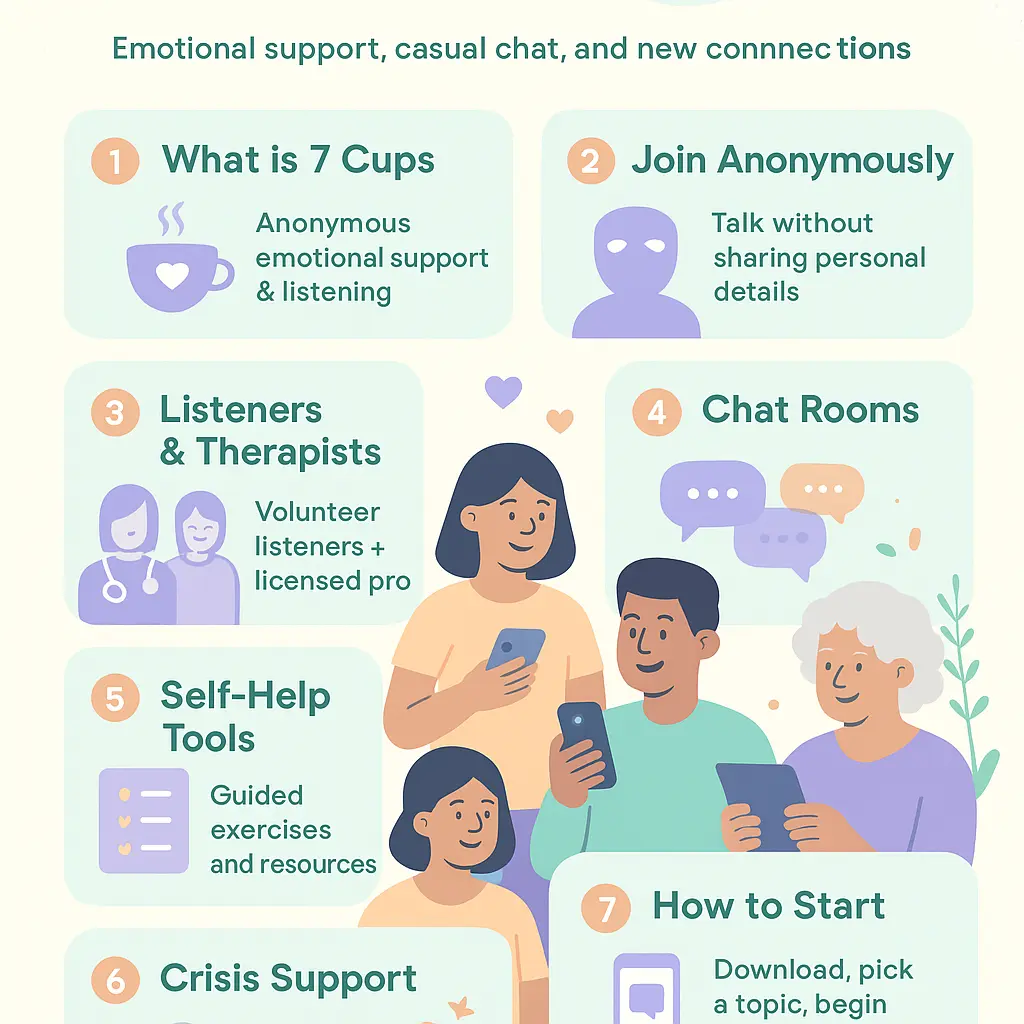
When it comes to finding people to talk to in 2026, technology continues to offer diverse ways to connect, whether you're seeking emotional support, casual conversation, or to grow your social circle. Some of the best apps to meet people are designed not only for chatting but also for building meaningful connections in a safe space. For those craving a supportive community, 7 Cups stands out with its network of volunteer listeners, licensed therapists, and peer support chat rooms. It’s ideal if you need mental health support or just someone to talk to anonymously. The platform’s focus on confidential text chat ensures a secure online chat experience, and you can access self-help resources or schedule sessions with a counselor, psychologist, or a licensed mental health professional.
If you're more interested in open-ended conversations and making friends worldwide, Omegle remains popular for anonymous chat with strangers. While it’s important to stay mindful of privacy and security, Omegle’s random video and text chat features allow you to meet new people online from across the globe. Just remember to use the platform’s safety tools to maintain a non-judgmental space.
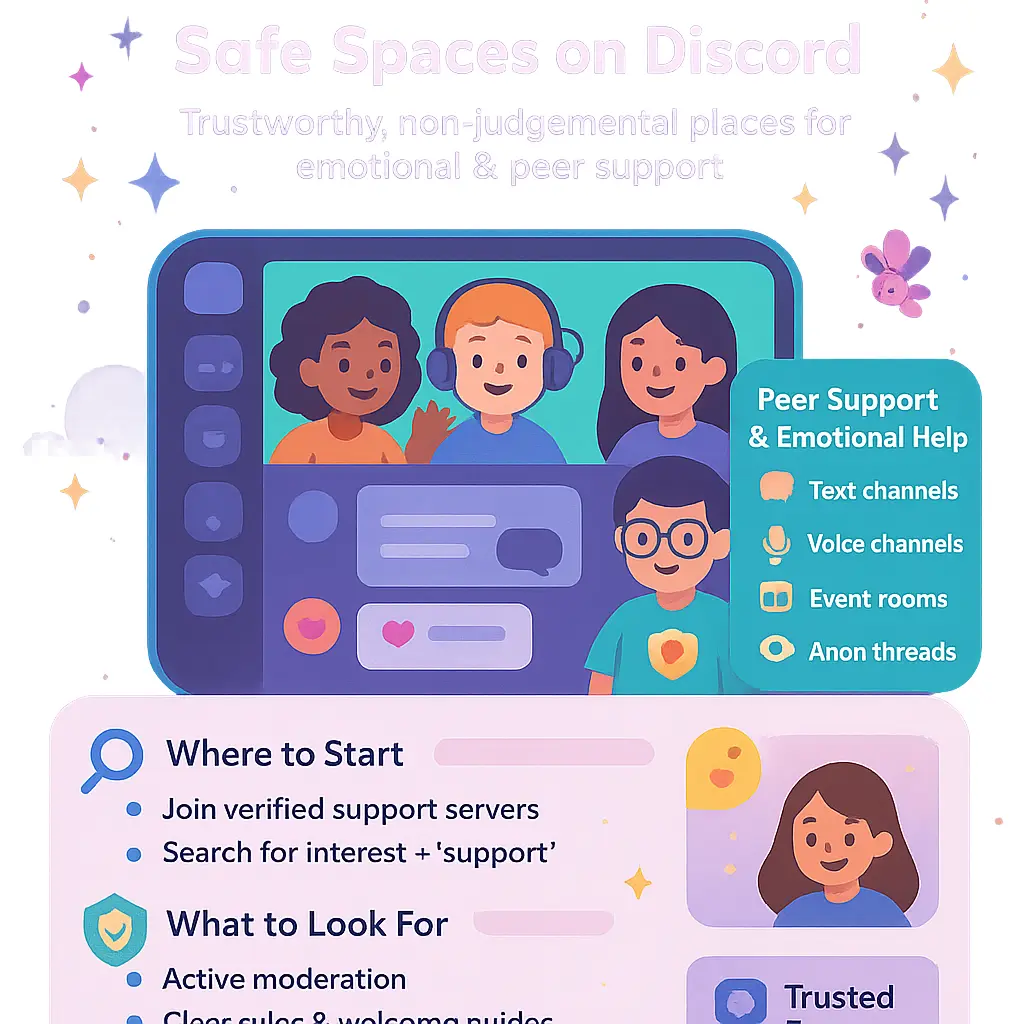
Discord has evolved into a versatile hub for both interest-based group chat and emotional support communities. Whether you’re joining a support group, an online gaming circle, or a mental health awareness community, Discord’s servers cater to almost every niche imaginable. You’ll find group and text chats dedicated to everything from friendship and study to peer support and self-help. Many servers are moderated to provide a compassionate listening environment, making it easier than ever to find a support network that fits your needs.
For those looking to expand their social life offline, Meetup helps you discover local events, hobby groups, and support networks. It’s perfect for finding community gatherings, mental health support groups, or sharing interests with new people in your city. The app’s search features let you filter for everything from hiking clubs to mental health awareness workshops, so you can meet people who share your passions.
Facebook, Reddit, and Instagram are still leading platforms for connecting with others, each offering unique ways to build community. On Facebook, you’ll find public and private groups focused on peer support, mental health, or making friends, with robust moderation and privacy controls. Reddit’s vast array of subreddits lets you join interest-based communities, participate in support networks, or chat anonymously in forums dedicated to emotional support. Instagram, meanwhile, has evolved into more than a photo-sharing app—it’s now a space for connecting with like-minded individuals, especially through group chats and interactive content.
TikTok is rapidly gaining ground as a friend finder app, especially among younger users who want to meet new people online. Through live streams and interactive challenges, TikTok helps users connect, share experiences, and find support. Mental health creators often host group chats and Q&A sessions, fostering a safe space for honest conversation and building a sense of community.
For those seeking romantic connections, online dating apps like Bumble and Tinder remain relevant, but new platforms prioritize safety, interest-based matching, and mental health awareness. Many dating apps now offer secure online chat features and include options for support group participation or connecting with licensed therapists for advice, addressing the emotional side of dating.
Online therapy apps like BetterHelp and Talkspace have transformed mental health support into an accessible, mobile experience. These platforms connect you with licensed therapists or psychologists for confidential chat or video sessions, often within hours. They typically offer secure chat rooms and self-help resources, making mental health support available wherever you are. For individuals seeking a more informal peer support experience, these apps frequently provide community forums and group chats designed to be a non-judgmental space.
Finally, traditional chat rooms have made a comeback within modern online communities, focusing on providing safe spaces for both casual conversation and emotional support. Whether you’re looking for compassionate listening, advice from a licensed mental health professional, or simply want to make friends worldwide, today’s online chat platforms offer a range of options to suit every need. When choosing the best app for you, consider whether you’re seeking mental health support, interest-based chat, or a broader support network—each platform brings unique features to help you connect and thrive in 2026.
Professional illustration about Facebook
Online Chat Platforms 2026
In 2026, online chat platforms have evolved into diverse and secure spaces that cater to a wide range of needs—from casual connections to specialized mental health support. If you’re searching for places to find people to talk to, these platforms now offer more features, better privacy controls, and deeper community engagement than ever before. 7 Cups stands out as a top choice for those seeking emotional support and conversations with trained volunteer listeners. Whether you're looking for peer support chat or one-on-one sessions with a licensed therapist, 7 Cups provides anonymous chat options and text chat rooms tailored to specific mental health concerns, making it a safe space for anyone needing compassionate listening.
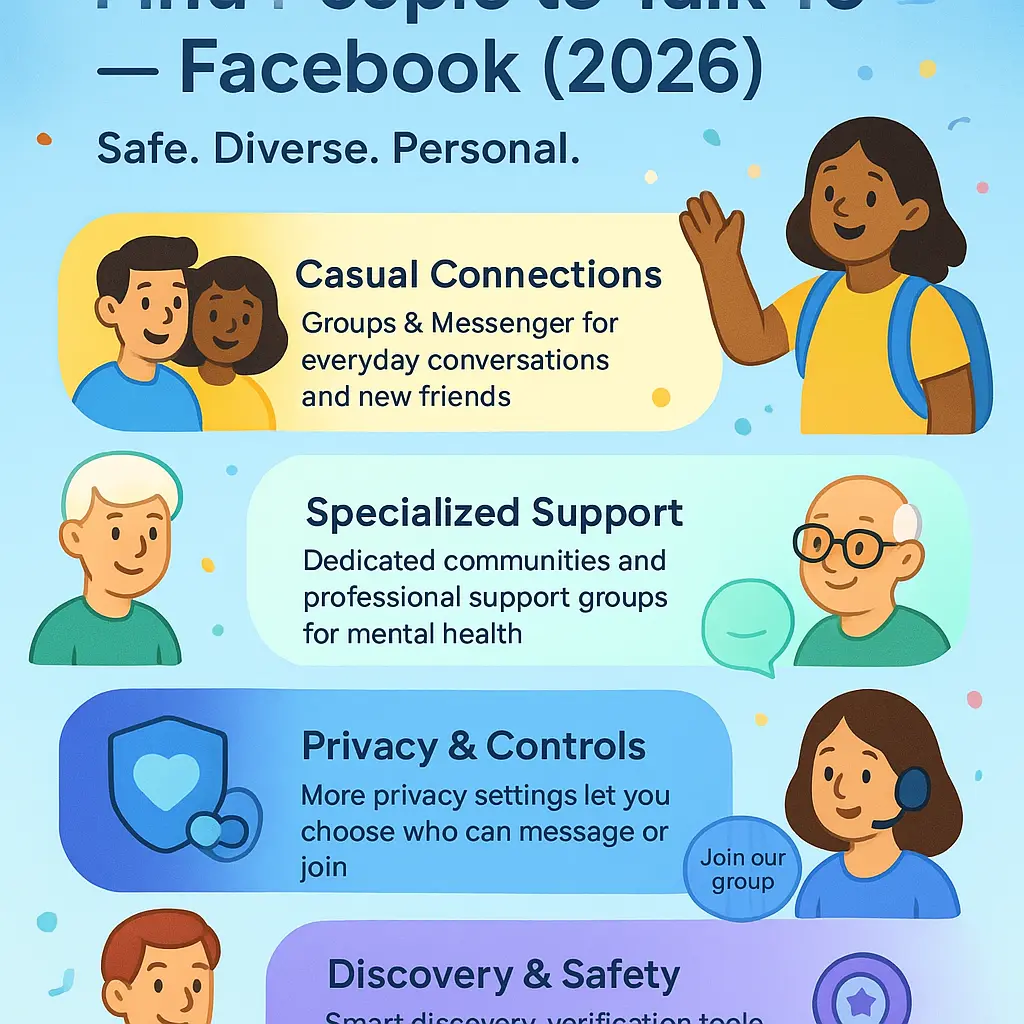
Meanwhile, social giants like Facebook and Instagram have expanded their group chat functionalities and interest-based communities. You can easily join a support network focused on mental health, parenting, travel, or practically any hobby imaginable. In 2026, Facebook’s Groups feature now includes secure online chat capabilities and moderated discussions led by community volunteers or mental health professionals. Instagram encourages authentic interaction through its chat room feature, where users can meet new people online based on mutual interests and engage in positive, non-judgemental discussions.
Platforms like Reddit and Discord are excellent for those seeking both anonymity and vibrant community interaction. Reddit’s countless subreddits offer dedicated spaces for emotional support, self-help resources, and mental health awareness. The platform emphasizes anonymity and peer support, so users feel free to share without fear of judgment. Discord has grown beyond gaming, becoming a hub for support groups, interest-based chat rooms, and even online therapy sessions with licensed mental health professionals available in some communities. The group chat experience on Discord allows for real-time discussions, voice chat, and private conversations, making it easy to make friends worldwide and find secure online chat spaces aligned with your needs.
Omegle remains popular for spontaneous, anonymous chat, letting users instantly connect with strangers around the world. While its random pairing feature is great for brief conversations and making connections, Omegle has beefed up its moderation tools in 2026 to ensure a safer experience, especially for those seeking non-judgemental space and emotional support.
For those interested in professional help, platforms integrating Online Therapy and connections to a Counselor or Licensed Therapist have greatly improved. Services powered by psychologists now offer confidential text chat and video therapy sessions, making mental health support more accessible than ever. These platforms provide users with secure online environments, full transparency regarding licensing, and the ability to match with a mental health professional based on specific needs—whether it's anxiety, depression, relationship issues, or general emotional support.
TikTok has surprised many by integrating community-based peer support features through live streams and group chats. Users can now join “Support Group” sessions hosted by advocates and mental health experts, fostering mental health awareness and real-time peer support. The platform’s algorithm can even suggest relevant communities and self-help resources based on your interests, making it easier to find a compassionate listening ear or connect with others experiencing similar challenges.
If you’re more focused on expanding your social circle or finding friends with common interests, platforms like Meetup and Online Dating apps are thriving in 2026. Meetup offers interest-based chat rooms and group events—both virtual and in-person—designed to help you meet new people online who share your hobbies, career goals, or life experiences. Modern online dating apps now integrate robust text chat and group chat features, so users can build connections in a safe space before meeting in person.
The landscape of online community and friend finder apps has also broadened, with new platforms emphasizing user safety, diversity, and genuine connection. Features like anonymous chat, secure online chat, and self-help resources are more readily available, making it easier than ever to build a support network or simply engage in meaningful conversations. Whether you’re looking for peer support, licensed therapy, or just a fun place to chat and make friends, 2026’s online chat platforms offer something for everyone, all within environments designed for privacy, inclusivity, and support.
Professional illustration about Reddit
Free Ways to Find Someone
Looking for free ways to find someone to talk to has never been easier, especially as online communities and chat platforms continue to grow in popularity throughout 2026. If you're seeking emotional support, mental health resources, or simply want to connect with new people in a safe space, there are a range of free options available. 7 Cups remains a popular choice for those in need of compassionate listening through their network of volunteer listeners and peer support chat. This platform lets you join group chat rooms or engage in secure online chat sessions one-on-one, all without charge, making it ideal for anyone seeking non-judgmental space or mental health support.
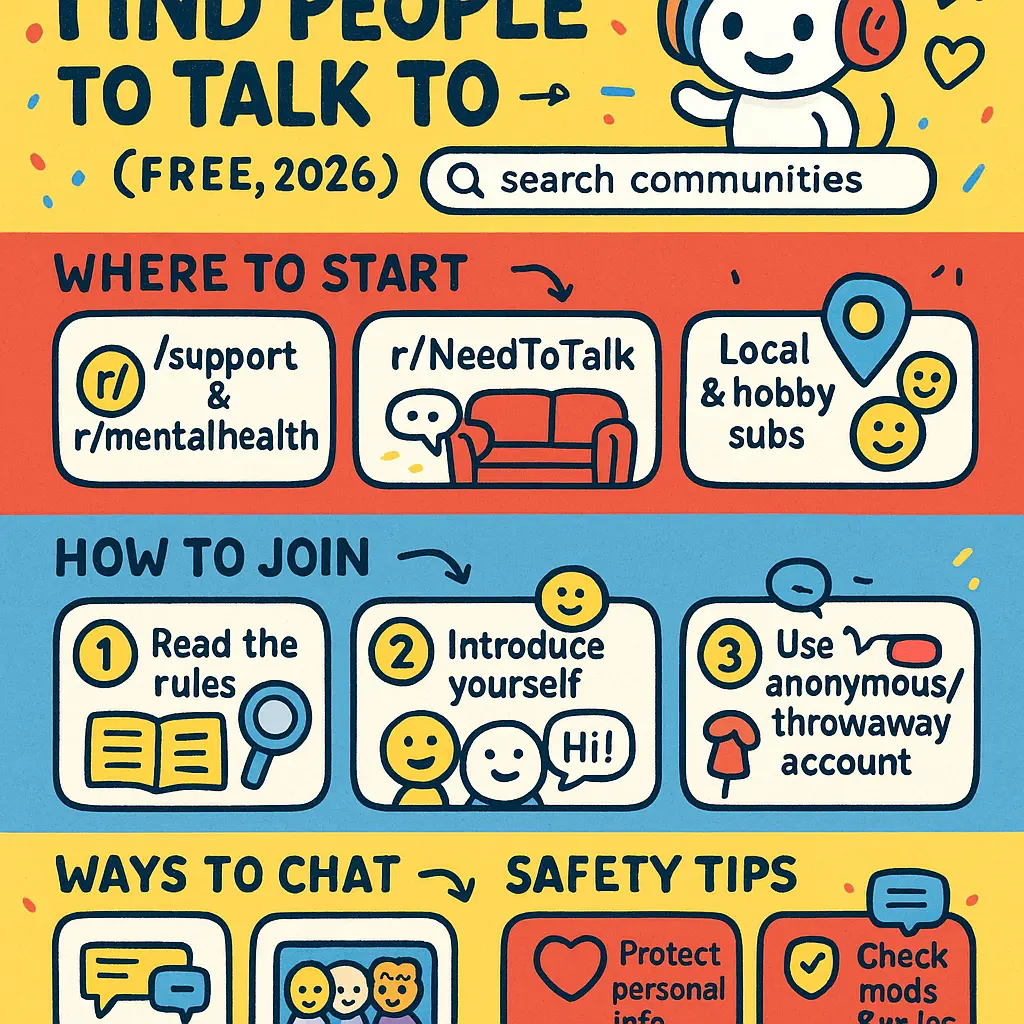
Social media platforms like Facebook, Instagram, and Reddit have evolved significantly, offering dedicated communities, support groups, and interest-based chat rooms where you can meet new people online and find those with similar experiences or challenges. For example, Facebook groups focused on mental health awareness or Instagram communities centered on self-help resources make it easy to build a diverse support network. Meanwhile, Reddit’s subreddits on mental health, online therapy, or even specific struggles like anxiety or loneliness, encourage open dialogue and peer support, often in an anonymous chat format to protect your privacy.
If you’re interested in more dynamic, real-time conversations, platforms such as Discord and Omegle provide group chat options and text chat rooms that attract people from all over the world. Discord servers dedicated to mental health or specific interests offer moderated, safe spaces where members can share experiences, get advice from peers, and even speak directly with mental health advocates or licensed professionals. Omegle, on the other hand, is well-known for its anonymous chat feature that connects you randomly with people worldwide. While it’s important to exercise caution due to its open nature, setting your interests can help you match with individuals looking for similar conversations or support.
For those wanting to expand their social circles or find friends with shared hobbies, Meetup has become more accessible, bridging both online and in-person gatherings. The platform now emphasizes virtual events and interest-based chat groups, which are perfect for anyone looking to make friends worldwide or connect within a specific community. Similarly, TikTok has introduced innovative group chat features and support group hashtags, enabling users to create and join mental health support circles, participate in live peer support sessions, and share experiences through short-form video content.
If your goal is to find support from certified professionals without spending money, some online therapy platforms now offer limited free sessions with a counselor, licensed therapist, or even a psychologist—especially during special awareness months or through nonprofit initiatives. These can be a valuable starting point for those needing guidance from a licensed mental health professional but who lack financial resources. Additionally, multiple friend finder apps and online dating platforms provide free versions that allow for text chat and group conversations focused on making new connections rather than romantic relationships.
When seeking these free avenues, always prioritize your safety and privacy. Choose platforms that offer secure online chat, enforce clear community guidelines, and provide moderation to ensure a respectful, non-judgmental space. Before engaging, check for signs of a healthy online community, such as active moderators, available self-help resources, and open discussions about mental health awareness. Over time, these free resources can help you build lasting peer support networks, find emotional support, and connect with people who truly understand your journey.
By exploring these diverse, no-cost avenues, you can find someone to talk to—whether it’s for casual conversation, emotional support, or professional mental health guidance. Whether you prefer anonymous chat, group discussions, or one-on-one connections, there’s a platform and community tailored to meet your needs in today’s digitally connected world.
Professional illustration about TikTok
How to Start Conversations
If you’re looking to find people to talk to online in 2026, knowing how to start conversations can make all the difference between a quick hello and building meaningful connections. Whether you’re reaching out for mental health support, hoping to make friends worldwide, or just seeking a friendly chat, the approach you take matters. On platforms like 7 Cups, you’ll often find volunteer listeners and peer support chats designed to be safe spaces for opening up. A simple way to kick off a conversation here is to express what you’re feeling: try “I’m having a tough day, could use some compassionate listening.” Using openers that mention your emotional state sets a respectful tone and shows you’re looking for genuine connection.
For more casual or interest-based channels such as Reddit, Discord, or Chat Rooms, starting conversations can be as simple as jumping into a group chat or online community. Look for subreddits or Discord servers focused on your hobbies or interests—introduce yourself and comment on something topical, like “Hey everyone, just saw the latest TikTok trend—what do you all think?” or “Any advice for someone new to this community?” These platforms thrive on shared experiences, so referencing mutual interests is an effective icebreaker. If you’re nervous, remember that most online chat platforms, especially those in 2026, are built to encourage dialogue and have clear guidelines to promote a non-judgemental space.
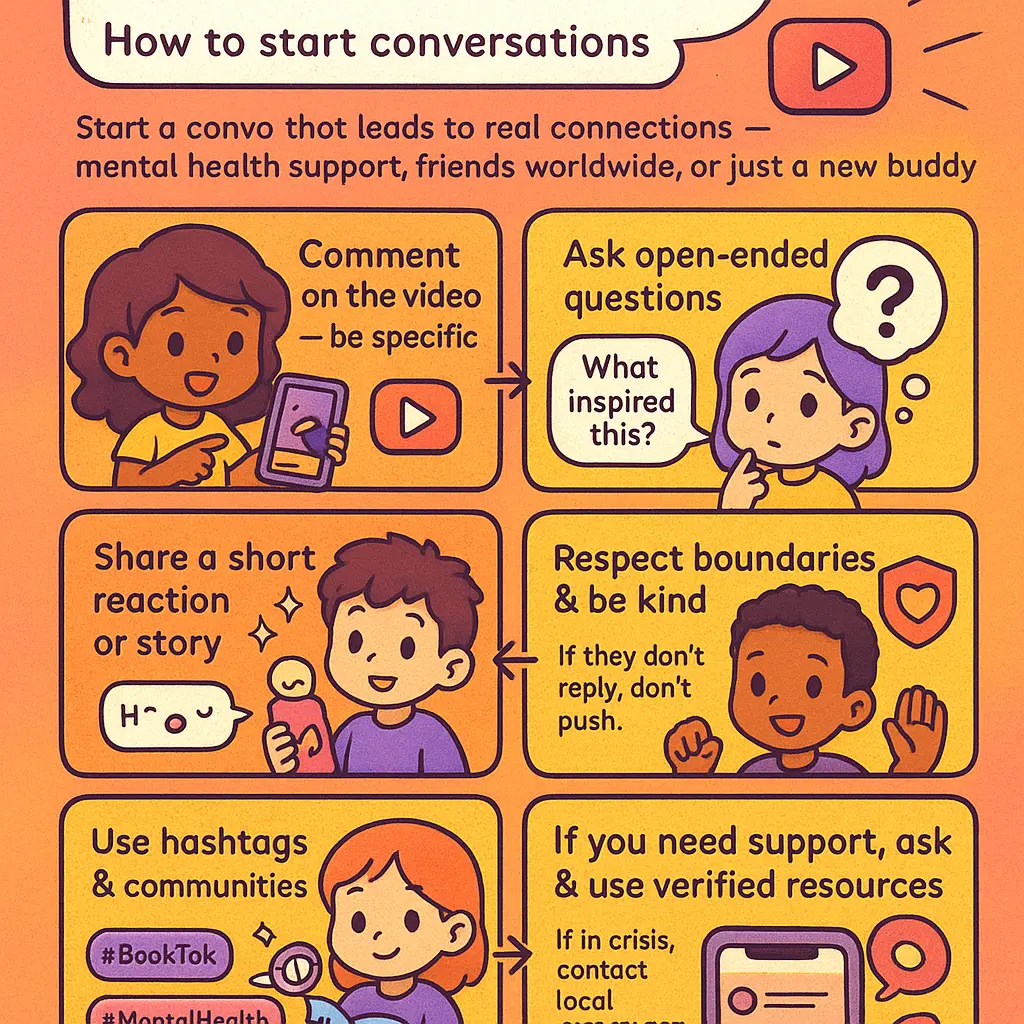
On social networks like Facebook, Instagram, or TikTok, meet new people online by engaging with posts or joining groups around positive topics. Leave thoughtful comments, react to stories, or join support groups tailored to specific needs (from mental health awareness to creative arts). Instead of sending a generic “Hi,” try something like “I noticed you posted about anxiety—how do you manage on tough days?” Genuine questions can lead to deeper conversations, especially if someone has shared something personal. If you’re on Online Dating apps in 2026, initiating conversation works best with playful or unique questions—break the ice with “What’s your favorite way to spend a lazy Sunday?” or “If you could chat with any psychologist, who would it be and why?” Personal, open-ended questions invite responses and show you’re interested in more than surface-level chit-chat.
For those seeking professional guidance, platforms offering Online Therapy or connections to a licensed therapist or counselor often feature secure online chat options. When messaging a licensed mental health professional, remember that honesty is key—don’t hesitate to share your background or what you’re hoping to gain from your sessions. Start with “This is new for me, but I’m hoping for emotional support and some self-help resources.” These professionals are trained to create a safe, supportive environment, so you don’t need to worry about judgment; opening up honestly sets the stage for effective help.
If anonymity is important to you, sites like Omegle and other anonymous chat platforms let you talk to strangers with zero pressure. Start with universal topics—music, movies, world events. In 2026, Omegle's algorithms even suggest conversation starters based on your chosen interests, so simply mentioning “I’m here to talk about mental health support” or “Anyone want to discuss new book releases?” can quickly connect you to the right people. Remember, secure online chat features have become standard; your privacy and safety are prioritized, so you can confidently reach out in these spaces.
Support networks have expanded dramatically, and peer support is increasingly accessible. If you’re joining a community for mental health, whether at Meetup events or online forums, approach others with empathy and a willingness to share. Try “I’m new here, looking to find people to talk to. What’s been most helpful for you in this support group?” This shows vulnerability and invites participants to share their experiences, helping you quickly build rapport and trust.
In summary, starting conversations online has never been easier or safer in 2026. Use text chat or group chat functions to initiate friendly banter, lean on self-help resources or licensed mental health professionals for structured support, and make use of friend finder apps to connect across the globe. Whether you’re seeking compassionate listening from a volunteer, advice from a psychologist, or simply new friendships, your openness, curiosity, and authenticity will always lead to richer interactions—just remember to respect boundaries and be yourself.
Professional illustration about Discord
Safe Places to Talk Online
Finding safe places to talk online has become increasingly important in 2026, with a growing awareness of mental health and the need for trustworthy, non-judgemental spaces. Whether you're seeking emotional support, interested in meeting new people, or looking for a peer support chat, there are numerous online communities and platforms designed to connect you safely and securely.
Online Therapy and Mental Health Support Platforms
For those in search of professional help, platforms like 7 Cups and online therapy services offer text chat and group chat spaces staffed by licensed mental health professionals, counselors, and psychologists. These resources are valuable for anyone wanting confidential mental health support without the stress of public exposure. Most reputable therapy apps ensure secure online chat environments, utilizing end-to-end encryption and strict verification processes for licensed therapists. Compassionate listening and emotional support are central, whether you're experiencing anxiety, depression, or just need someone to talk to. The presence of volunteer listeners on 7 Cups, for example, allows users to engage in anonymous chat with trained individuals dedicated to offering peer support and understanding.
Community-Driven Platforms for Peer Support
If connecting with a broader support network is your goal, platforms like Reddit and Discord host a variety of mental health support groups and interest-based chat communities. Subreddits focused on mental health awareness often act as non-judgemental spaces where thousands contribute their experiences and coping strategies. Discord, beyond gaming, now hosts secure group chats for peer support and self-help resources on everything from grief to social anxiety. These communities are moderated to ensure a safe space free from harassment or toxicity, though users should still practice caution and protect their personal information.
Social Media and Making New Friends
Popular social networks such as Facebook, Instagram, and TikTok continue to evolve with new features tailored to facilitate meaningful conversations. Facebook's private groups and Messenger rooms can offer closed environments for support, while TikTok's live streams often host mental health Q&As, allowing viewers to interact anonymously. On Instagram, DMs and private group chats offer flexibility for friend finder apps and interest-based connections, with privacy controls that let you curate who can contact you. While these platforms are mainstream, it's crucial to adjust your privacy settings and be selective about the communities you join to ensure a safe, secure online chat experience.
Anonymous Chat Rooms and Specialized Networks
For those seeking to meet new people online without revealing their identity, platforms like Omegle, certain Discord servers, and specialized chat rooms can be viable—although caution is needed. Omegle remains popular for global interaction, letting you chat with strangers based on shared interests, but it's important to remember to never share personal information and use these platforms for lighter, general conversations rather than sensitive topics. Some newer platforms in 2026 have improved privacy protocols and moderation, making anonymous text chats safer than before. Still, choosing well-rated, widely recommended chat platforms is a smart move.
Support Groups and Meetup Communities
For structured support, joining an online support group or community like those found on Meetup can provide interaction with individuals facing similar life challenges. Many of these groups are moderated by licensed professionals or experienced peer support volunteers, emphasizing confidentiality and a compassionate, empathetic environment. Support groups focusing on areas such as grief, addiction recovery, LGBTQ+ issues, or chronic illness can foster genuine connections and sustained emotional support, often blurring the line between virtual and real-world friendship.
Safety Tips for Online Conversations
When exploring safe spaces to talk online, keep these recommendations in mind:
- Use platforms with robust moderation and privacy controls.
- Stick to established communities with positive reviews and a clear code of conduct.
- Never share sensitive personal details (address, financial info, etc.) in public or private chats.
- Prefer platforms offering anonymous chat or the option to join as a pseudonymous user if you’re concerned about privacy.
- Look for support networks or online communities that offer verified, licensed mental health professionals.
- Be cautious with online dating platforms and always prioritize safety when meeting new people online.
Today’s digital landscape provides countless safe spaces to connect, whether you’re looking for a supportive network, mental health help, or simply a friendly chat. With the right precautions and by choosing the right platforms, anyone can find secure, welcoming environments to talk—no matter their needs or background.
Professional illustration about Omegle
Group Chat Communities
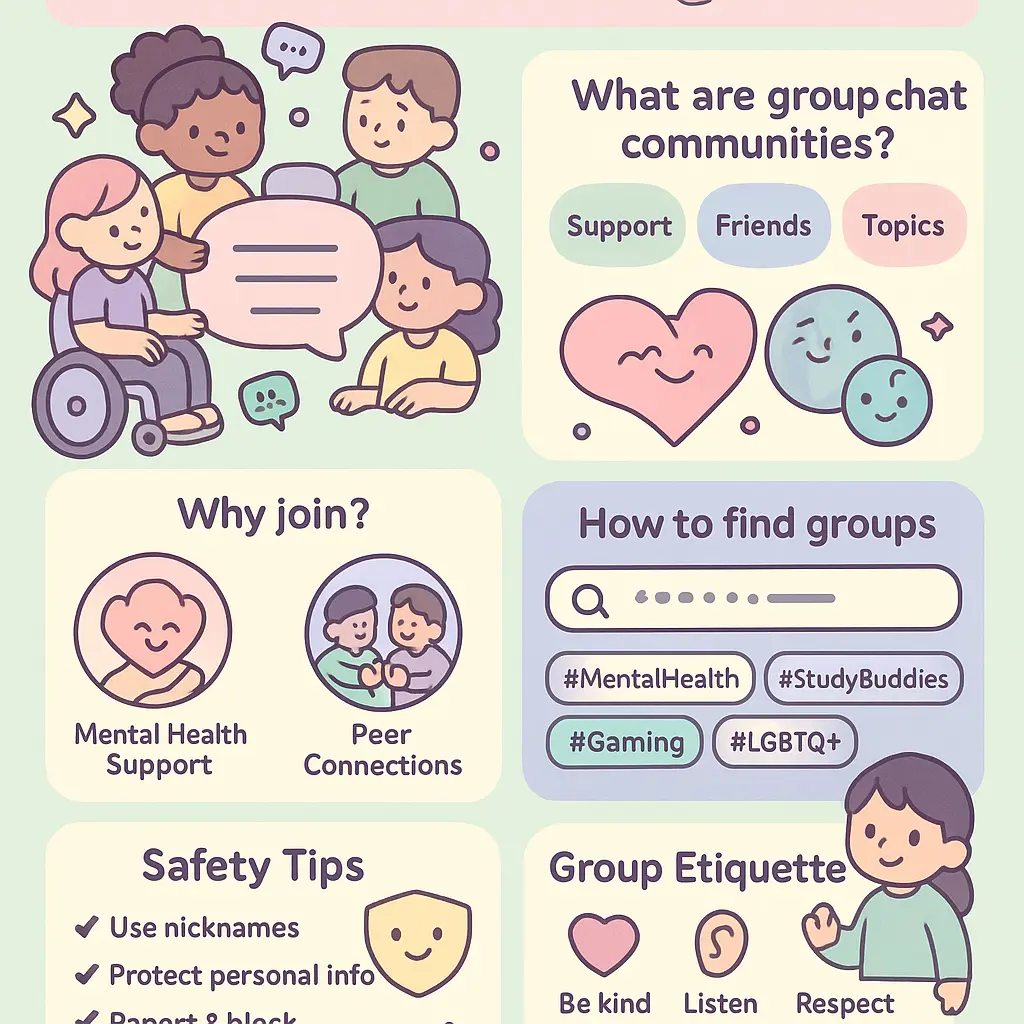
Group chat communities have quickly become one of the most dynamic ways for people to find meaningful conversations, especially in 2026’s ever-evolving digital landscape. Whether you’re looking for mental health support, peer connections, or simply wanting to make friends worldwide, there’s a group chat for every interest, background, and need. Platforms like Discord, Reddit, and Facebook have led the charge, giving rise to online communities where you can connect with strangers and build lasting support networks in secure, non-judgemental spaces.
Discord has revolutionized group chat communities, providing easy-to-navigate servers organized by interests, age groups, and geographic location. For example, if you’re searching for emotional support or mental health awareness, you’ll find numerous servers dedicated to topics like anxiety relief, peer support chat, and even virtual sessions with licensed therapists. Many communities on Discord offer anonymous chat features, allowing members to share and seek advice without revealing their identity. Moderators and volunteer listeners help maintain a safe space for conversations, promoting non-judgemental interaction and compassionate listening.
Facebook Groups remain a powerhouse for finding support groups and interest-based community chats. Whether you’re interested in self-help resources, parenting advice, or local meetups, Facebook makes it simple to join public or private groups tailored to your needs. Specialized communities like "Mental Health Warriors" or "Support Network for Grief" utilize text chat and group discussions, sometimes even inviting licensed mental health professionals or psychologists to host live Q&As. The variety allows users to choose what level of privacy and interaction they’re comfortable with, making these groups particularly valuable for both emotional support and practical advice.
On platforms like Reddit, subreddits function as chat rooms where users interact through threads and live chat features. Communities such as r/KindVoice and r/SocialSkills provide a judgment-free environment for members to seek advice, vent, or practice social interactions. Peer support groups often include volunteer listeners and experienced moderators who keep the atmosphere positive and free of toxicity. For individuals wary of sharing in traditional social settings, Reddit’s anonymous format proves invaluable.
TikTok and Instagram have introduced new forms of group chat functionality through direct messaging and live streams. TikTok’s "Live Groups" and Instagram’s "Group Chats" encourage users to form smaller, tight-knit circles around shared interests like music, gaming, art, or wellness. These platforms are perfect for making new friends online through short-form videos, comments, and interactive text chat. Although not specifically designed for therapy, creators increasingly host mental health support sessions, inviting audience participation and building communities that double as safe spaces for self-expression and support.
If you're seeking specialized help, platforms like 7 Cups offer dedicated support group chats led by volunteer listeners and licensed mental health professionals. The service includes both peer support chat rooms and one-on-one options with counselors and therapists, focusing heavily on emotional support, secure online chat, and mental health awareness. The anonymity and accessibility of 7 Cups make it one of the best places to connect with others who genuinely understand your struggles.
For those interested in online dating and making new friends or connections, apps like Meetup and Omegle still provide group and interest-based chat options in 2026, though with more robust safety and privacy features. Meetup helps you find local and digital group events centered on hobbies or professional networking, offering real-time group chat experiences and fostering community bonds. Omegle, known for random anonymous chat, has improved moderation and reporting tools, making casual interaction safer and more user-friendly.
Choosing the Right Group Chat Community
- Consider Your Goals: Are you searching for mental health support, looking to chat with a licensed therapist, or simply wanting to expand your social circle? Platforms that specialize in support networks, like 7 Cups or dedicated Discord servers, fulfill needs for peer support and emotional safety, while apps like Meetup cater to social and professional groups.
- Evaluate Safety and Privacy: Secure online chat features and moderation are key to maintaining a safe space. Opt for communities with clear guidelines, competent moderators, and the option for anonymous chat if privacy matters to you.
- Explore Interest-Based Communities: Whether you’re a gamer, artist, entrepreneur, or wellness enthusiast, there are group chats designed for your interests on Discord, Reddit, and Instagram.
- Leverage Peer Support: Volunteer listeners and experienced members can provide guidance, encouragement, or simply a listening ear. This is especially valuable when seeking mental health support or assistance with life’s challenges.
In today’s digital-first world, group chat communities offer more than just social engagement—they’re real support networks, self-help resources, and opportunities to meet new people online. By exploring various platforms and communities, you can find the right mix of connection, compassion, and conversation to suit your needs.
Professional illustration about Support
Social Media for Making Friends
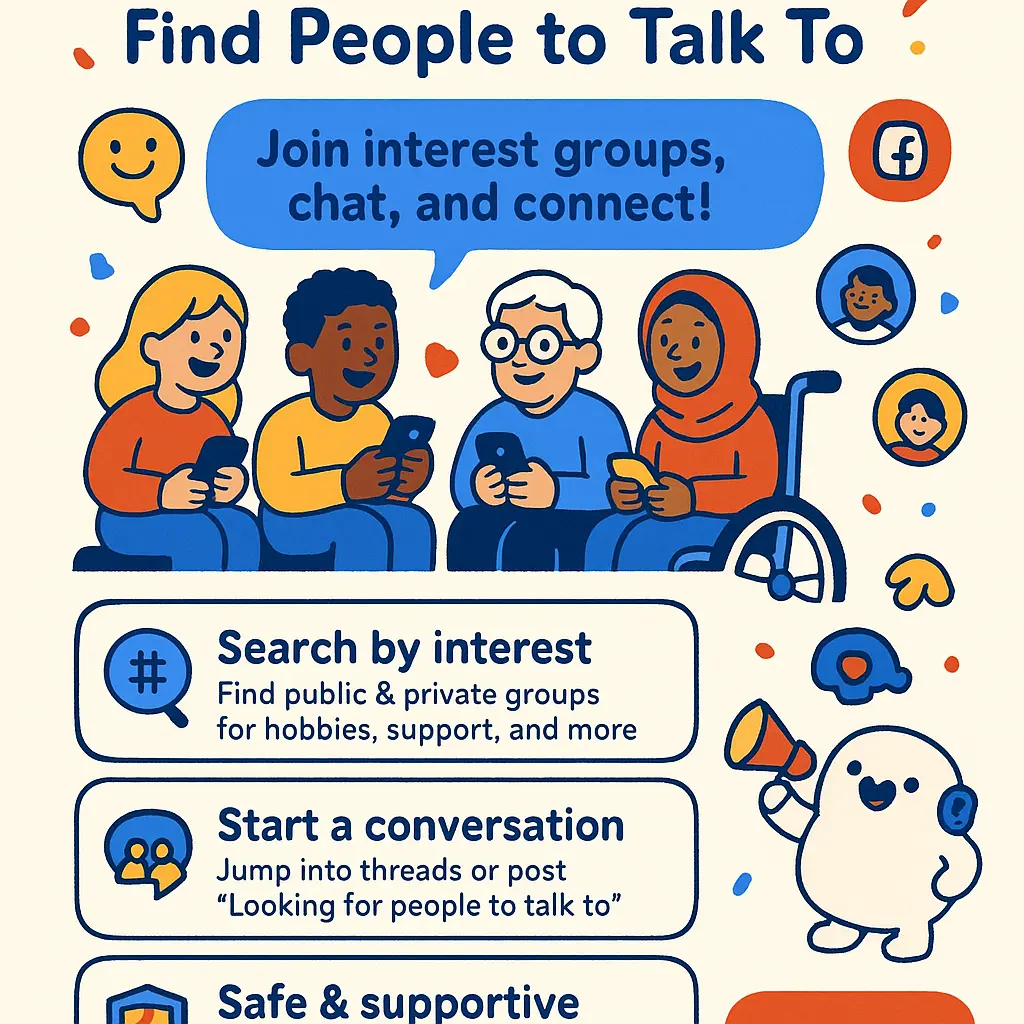
When it comes to making friends in 2026, social media platforms have truly reshaped the way we connect with others. Beyond just broadcasting updates, channels like Facebook and Instagram now operate as global communities where you can join interest-based groups, participate in public or private group chats, and start meaningful conversations through text or video chat. For example, joining a local Meetup group via Facebook or an activity club promoted on Instagram Stories allows you to meet new people online who share your hobbies, whether that's hiking, knitting, or playing video games. Even more, Facebook's integrated Support Groups and "friend finder" features are now tailored with advanced algorithms to help you find people to talk to based on shared interests and mutual connections.
If you're craving more fast-paced or anonymous chat experiences, platforms like Reddit and Discord have changed the game, each fostering unique online communities. Subreddits focused on emotional support, everything from mental health awareness to non-judgmental "vent" channels, let you reach out to peers across the globe for compassionate listening without revealing your real identity. On Discord, themed servers act as vibrant group chat hubs where peer support and interest-based chat rooms exist for anything imaginable—from gardening to movie reviews to safe mental health support. Many Discord communities have vetted volunteer listeners and clear rules to maintain a safe space and secure online chat environment, which is key when talking about sensitive issues.
For those specifically seeking mental health support or just a genuine ear, platforms like 7 Cups and dedicated Online Therapy services have flourished. 7 Cups provides access to trained volunteer listeners and even connections to licensed therapists, offering a unique blend of self-help resources and real-time peer support chat. In 2026, these services are even more secure—their support networks are monitored for your safety, and many feature 24/7 availability, so support is never far, whether you’re feeling low at midnight or seeking daytime guidance. 7 Cups and similar platforms offer both anonymous chat and more personalized sessions with a licensed mental health professional, ensuring that users get both the emotional support and the professional guidance they need.
If spontaneous connections intrigue you, Omegle (now with enhanced moderation in 2026) still lets users have anonymous voice or visual conversations with random strangers worldwide. It's ideal for those looking to practice another language, make friends worldwide, or just enjoy casual chats outside their typical social circles. However, it’s wise to approach such platforms with caution: always use features that limit exposure of personal information to keep your experience safe.
TikTok has evolved, too—far from just bite-sized videos, its Live and Group Chat features encourage real-time interaction. In-app challenges and collaborative content foster a sense of community, making it easier than ever to strike up a conversation with someone who likes the same music, crafts, or comedy as you do.
For more intentional relationships—whether you're searching for friendship or something deeper—online dating apps now increasingly cater to platonic connections. Many have robust filtering options, allowing users to seek peer support, form support networks, or make friends based on shared experiences, such as moving to a new city or managing anxiety.
Those looking for a more focused environment—particularly around wellness and health—are finding robust online support groups for all kinds of life situations. Many are now hosted on hybrid platforms where certified counselors, psychologists, or licensed therapists moderate discussions, ensuring these communities remain supportive and non-judgemental. This gives people experiencing the same life challenges a secure online chat environment to forge friendships rooted in empathy and understanding.
Self-help resources and organized "check-in" events, now embedded in most major social platforms, make it easier to maintain those connections too. Automated reminders, mood journaling, and guided group sessions foster ongoing peer relationships and mental health awareness—not just fleeting interactions.
Ultimately, exploring these various platforms in 2026 means you have a vast array of choices: from volunteer listener chats for emotional support to group activities hosted on Facebook and friendship-oriented apps that prioritize your need for a safe, supportive community. The key is to try different avenues, be open about your interests, and always prioritize your safety while building new, meaningful relationships online.
Professional illustration about Therapy
Professional Networking Sites
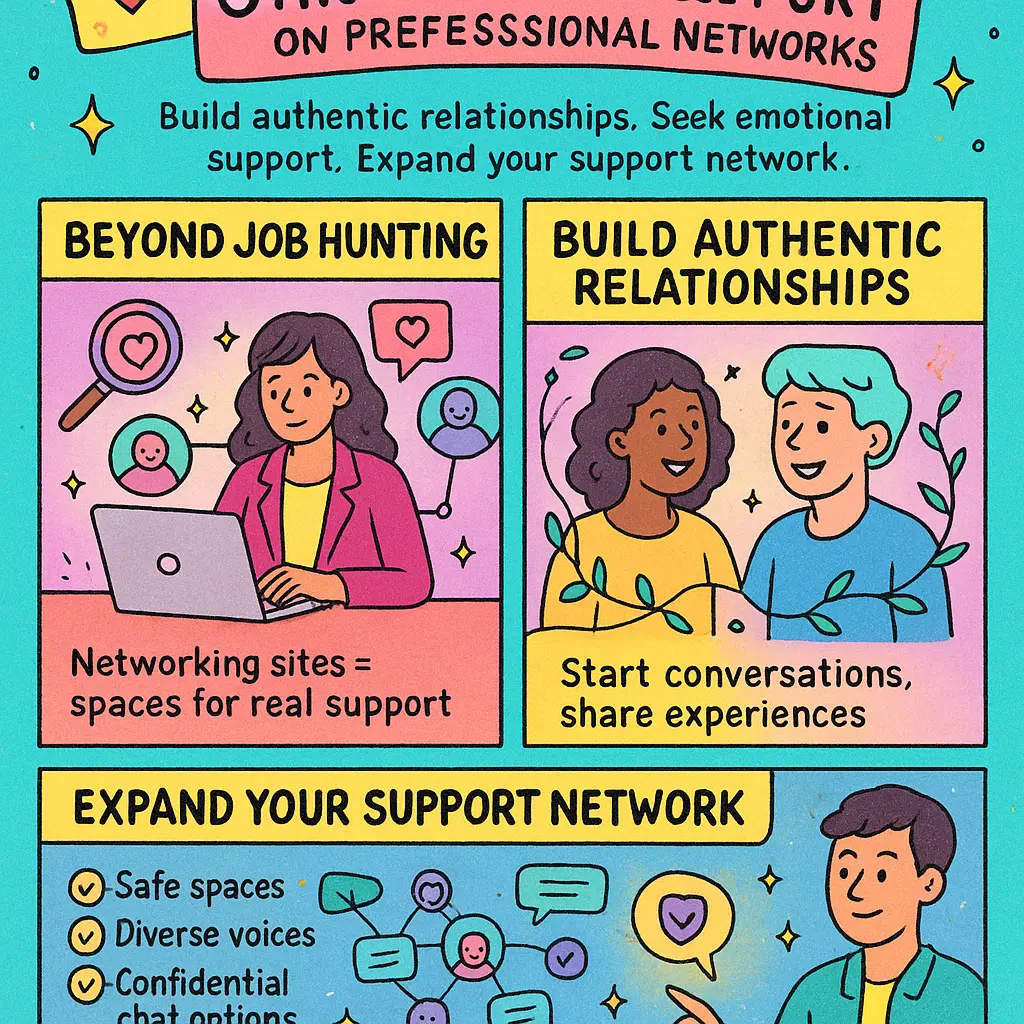
In 2026, professional networking sites have evolved far beyond job hunting; they're now critical platforms for building authentic relationships, seeking emotional support, and expanding your personal support network within your industry or area of interest. Whether you're a young professional, an entrepreneur, or simply trying to find people to talk to about career development or mental health, these sites can bridge the gap between isolation and community.
Leading the way, platforms like LinkedIn and Meetup aren't just resumes and event listings anymore—they've become vibrant online communities offering secure online chat, interest-based group chats, and peer support opportunities. For instance, LinkedIn Introductions, direct messaging, and topic-driven groups can spark honest conversations about professional struggles, mental health awareness, and burnout—often in a compassionate, non-judgmental space with licensed mental health professionals chiming in on hot topics. Meetup’s latest features, meanwhile, now support virtual interest groups, connecting individuals across cities (or even continents) for live peer support chats and skill-sharing sessions that go well beyond business cards.
If you crave deeper connections or emotional support at work, try looking for dedicated support group communities on these sites. Many now include subgroups specifically for psychological well-being, offering resources such as online therapy recommendations, self-help resources, or even referrals to licensed therapists. For example, creative industry professionals have formed Discord servers focused on burnout and anxiety, with peer support chat rooms overseen by volunteer listeners and counselors—providing that much-needed compassionate listening and a safe space for venting stress.
Online communities like those on Facebook and Reddit also play an increasingly vital role in professional support. Facebook Groups, often considered informal, have matured into semi-private forums where industry insiders discuss job stress, project management woes, and mental health support in a practical, accessible format. Moderators ensure it's a secure online chat environment, turning these spaces into welcoming communities for constructive advice or even anonymous chat.
Reddit’s r/AskAcademia, r/Entrepreneur, or even r/CareerGuidance subreddits employ text chat, group chat features, and real-time discussion threads—sometimes paired with licensed therapists or psychologists providing voluntary expert input. Users share their personal stories and seek advice on navigating work-life balance challenges; the upvote system helps highlight the most compassionate and insightful answers.
For those seeking more dynamic peer support and networking opportunities, TikTok and Instagram may surprise you. Especially in 2026, short video content creators regularly host live Q&A sessions, mental health awareness streams, and DM-based interest chats, making it easier to meet new people online by discussing industry trends or personal experiences. TikTok also supports richer audience interaction via comment threads and live group chats. Mental health-focused hashtags have become mini support networks, allowing anyone, including those searching for support, to jump into a self-help discussion or get advice from a licensed mental health professional.
Platforms such as 7 Cups, while often associated with emotional support and anonymous chat, now offer dedicated channels for career counseling and community building. Their volunteer listener model empowers users to seek help for work-related anxiety, communication problems, or the pressures of being a leader. Through secure online chat, volunteer listeners, counselors, and site-wide support groups, users can confidently share concerns or ask for advice in a truly judgment-free space.
Discord and Chat Room platforms remain invaluable for virtual networking within specialized industries—tech, healthcare, creative arts—enabling global professionals to participate in group chat sessions, meet friends worldwide, or join peer support networks tailored to their professional and mental health interests. These online community hubs excel at fostering collaborative friendships and providing access to practical, real-time advice from people who truly understand your journey.
When seeking to make genuine connections safely, always look for platforms that emphasize confidentiality and moderation. Features like verified user IDs, anonymous chat options, and specialized friend finder apps create non-judgemental spaces where you’re free to ask sensitive questions or request emotional support. Remember, engaging in professional networking sites goes well beyond advancing your career—it's about building a comprehensive, supportive community focused on mental well-being and human connection in today’s digital-first world.
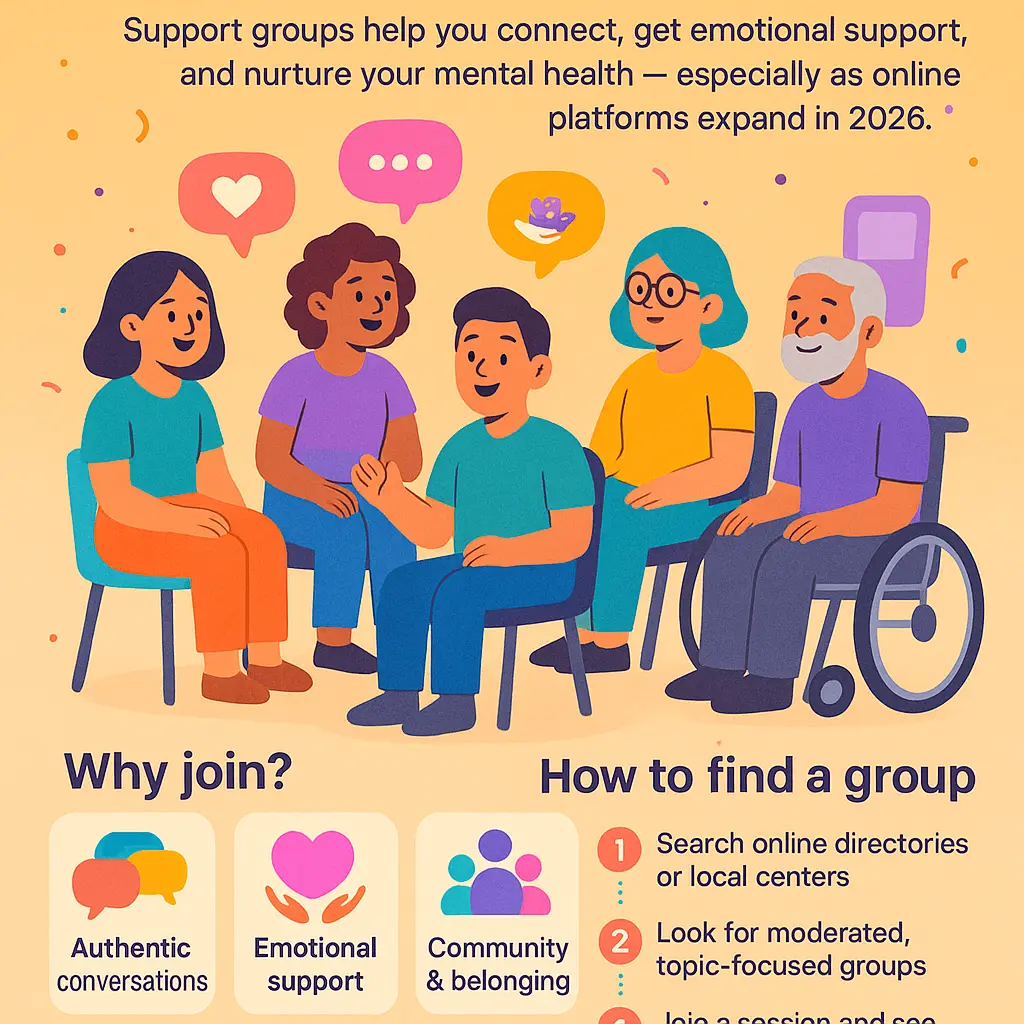
Professional illustration about Mental
Support Groups for Talking
Connecting with support groups is one of the most reliable ways to find authentic conversations, get emotional support, and nurture your mental health—especially as online platforms continue to expand in 2026. Unlike one-on-one chat apps or social feeds, support groups bring together communities bound by shared experiences or interests, offering a non-judgemental space and a secure environment for open dialogue. Whether you are searching for peer support, guidance from a licensed therapist, or simply a group chat to vent in, these communities can significantly upgrade your support network.
Today, platforms like 7 Cups allow you to tap into various support channels, ranging from peer support chat rooms staffed by trained volunteer listeners, to text-based counseling provided by licensed mental health professionals or psychologists. The beauty of 7 Cups' approach is its diversity of chat options: you’ll find anonymous chatrooms, specialized group chats for stress, depression, parenthood, and more. For those seeking resources beyond live conversations, their self-help resources and compassion-based listening modules foster mental health awareness and empower personal growth in a welcoming, safe space.
Social networks such as Facebook and Reddit remain go-to places for discovering public and private support groups centered around topics from grief to ADHD, anxiety, work-life balance, and LGBTQ+ experiences. With advanced group search tools rolled out in 2026, it’s easier than ever to filter results by group size, activity level, and moderation practices, making it safer to find communities where anonymous chat and secure online interactions are prioritized. For real-time conversations, Facebook Groups now include live streaming with therapist Q&A events and virtual meetups, which means you can talk directly to experts or peers without leaving Facebook Messenger.
If you prefer platforms driven by real-time interaction and interest-based chat, Discord is revolutionizing the group therapy landscape. Not just for gamers anymore, thousands of mental health support servers offer round-the-clock group chat moderation, confidential text channels, and even scheduled sessions with licensed counselors who host digital workshops on mindfulness or burnout recovery. Discord’s privacy controls in 2026 now let you stay truly anonymous or verify your identity as needed, giving confidence in the safety and privacy of emotional support conversations.
Reddit adds a powerful layer for those favoring community-driven advice. Subreddits dedicated to support—like r/BPD or r/SuicideWatch—bank on the power of peer support and crowdsourced recommendations for mental health support apps, therapists, and crisis hotlines. Plus, its user voting system helps surface compassionate listeners and trustworthy guidance, saving you time and emotional energy.
Modern options like Meetup and social apps including Instagram, TikTok, and online dating tools have also adapted for group support needs. Meetup now hosts local and online communities focused on everything from overcoming loneliness to forming self-help groups for various conditions. Many influencers and certified psychologists on Instagram and TikTok regularly organize DM-based group chats and comment section support circles, letting followers share stories and get advice in secure online chat environments. Some dating apps, too, have introduced “friend finder” features bundling interest-based chat with community support environments so you can make friends worldwide, not just dates.
For spontaneous, anonymous conversations, platforms such as Omegle and specialized chat room sites are still evolving. In 2026, stricter moderation, enhanced security, and built-in mental health awareness functions offer safe spaces for instant connections—ideal for those needing a supportive listener or peer talk at an odd hour. You’ll encounter not just casual chat but purpose-driven spaces championing compassion, secure sharing, and sometimes even certified online therapist access.
Online therapy and virtual support groups are valuable too. Many major providers now include optional group sessions led by licensed therapists, psychologists, or counselors so you can benefit from collective wisdom along with individual feedback. These group meetings may focus on specific mental health challenges like anxiety, bereavement, substance recovery, and more, allowing for real-time emotional support combined with professional advice.
Key tips for finding the right support group: - Assess the moderation and privacy level: Look for platforms that prioritize secure online chat and non-judgemental space. - Choose your preferred format: Some platforms focus on text chat, while others include voice, video, or group chat functionality. - Verify credentials if seeking professional guidance: Ensure your counselor, licensed therapist, or psychologist is accredited. - Check activity and responsiveness: Healthy support groups should have active facilitators, frequent discussions, and responsive moderators. - Start with peer support spaces if you’re new: Volunteer listeners and peer-led groups provide welcoming entry points without pressure. - Don’t avoid platforms just because they're new—TikTok, Instagram, and Discord have become legitimate spaces for emotional support and interest-based communities by 2026.
Support groups—whether they're large online communities or intimate group chats—offer a tested and evolving network for talking, connecting, and healing. With the extensive range of platforms now available and robust security and privacy enhancements, you can finally find your ideal group for compassionate listening and meaningful peer support, ensuring you never have to face life's challenges alone.
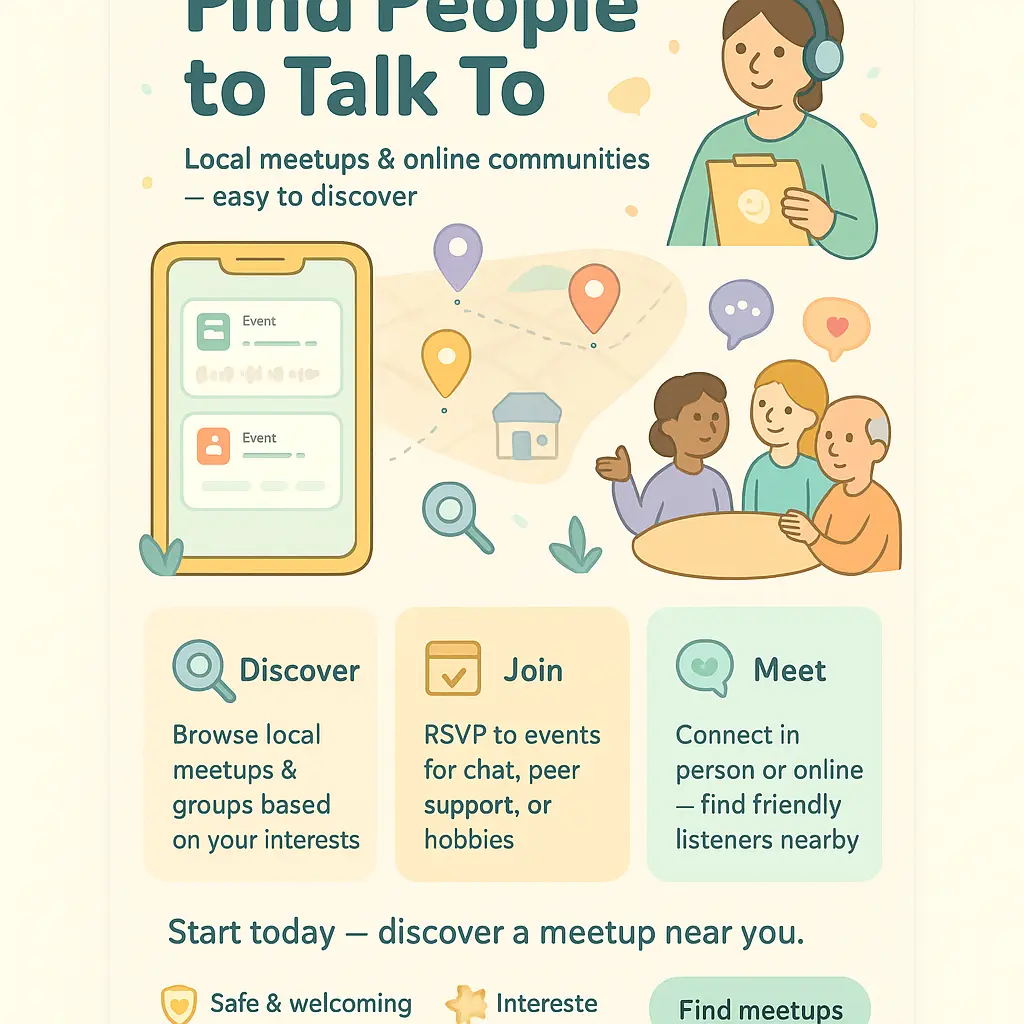
Professional illustration about Counselor
Local Meetups Near You
Local meetups near you have never been easier to discover, especially with today's seamless integration between online communities and real-world connections. Platforms like Facebook and Meetup spotlight events designed for interest-based chat and peer support, making it practical for people hungry for face-to-face companionship or emotional support to find safe spaces locally. If you’re seeking a support group focused on mental health, or simply want to make friends worldwide starting with those in your zip code—2026 brings a whole new level of accessibility and security.
Many support networks run hybrid models these days: they’ll offer anonymous chat and group chat via communities like 7 Cups or Discord, then coordinate in-person coffee socials or self-help workshops so their loyal members can transition from energetic text chat rooms into meaningful offline bonds. Reddit continues to serve as an engine for local interest threads—search for your city under subreddits like r/[yourcity]friends or “Meetups2026,” where volunteers post non-judgemental space gatherings and peer support circles; you might just stumble upon that perfect walking group or movie night that relieves a tough week’s stress.
Licensed mental health professionals recognize the powerful synergy between authentic community interaction and online therapy. Counseling centers leveraging platforms such as Instagram and TikTok now publicize local group therapy sessions, open talks with a licensed therapist, and psychologist-led seminars planned for area residents. For those interested in exploring compassion and connection, some counselors will even run mental health support pop-ups in parks, libraries, or coffee shops, making face-to-face emotional support just a walk away. You can book time for secure online chat, then switch to live counseling or join open community healing sessions within your own neighborhood.
Consider specialized interest communities beyond the usual—Omegle’s local filters let you search for people nearby who share your hobbies, whether you’re into art, fitness, gaming, or volunteering. Discord servers like “Meet Locals,” popularized by their safe space moderators, arrange monthly mixers for local digital friends to finally socialize in person. Many support group organizers on Facebook also harness volunteer listeners or peer support chat models that break isolation cycles; these events aren’t just for self-help, but for genuine, lasting friendships based on mutual compassion.
If you’re new to city life or on the hunt for your tribe, friend finder apps with robust privacy features make it practical to connect with nearby folks willing to share a coffee or even a group yoga class. Many such apps combine online chat platforms with verified event calendars, risk-reducing procedures for secure meetups, and mental health awareness campaigns—so your outing isn’t only about having fun, but also nurturing your well-being in a trusted network. Text chat and online community pre-event sessions are commonplace and help people gauge group chemistry and set expectations for the meetup itself.
One powerful tip: Always explore whether your chosen local meetup does a screening for compatibility or hosts orientation sessions through licensed mental health professionals or certified peer organizers. This safeguard ensures a non-judgemental space where everyone feels secure and heard. To maximize value in 2026, seek out neighborhood event feeds on Reddit or curated calendars on Discord, or subscribe to mental health support newsletters via Instagram for timely updates.
Real-world connection increasingly complements online chat platforms—so don’t hesitate to start with a digital hello before you go to an in-person dinner, hiking trip, or group counseling session with trusted peers and compassionate listeners. As interest-based chats shift from digital to in-person meetups, remember that the best support groups skillfully blend online security with offline warmth, keeping your data safe and your heart open.
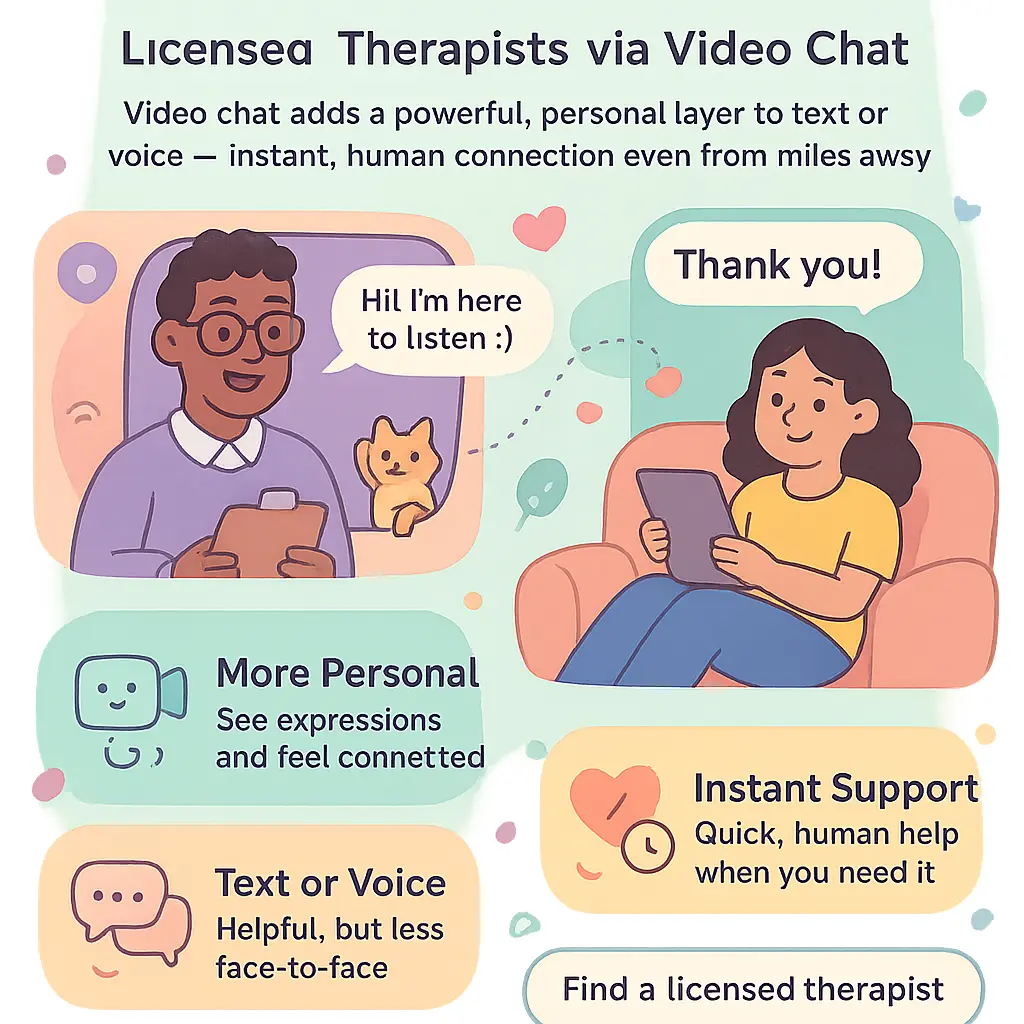
Professional illustration about Therapist
Video Chat Services
When you're genuinely seeking someone to talk to, video chat services can add a powerful, personal layer to traditional text chat or voice calls. They can foster a real sense of connection and instant support, helping you feel as if you’re truly interacting with another human—even if you’re miles apart. Across America, platforms like Discord, Facebook, and even Reddit’s various communities are amplifying the video chat experience, making it easier than ever to access peer support chat, anonymous connections, or organize group sessions focused on bagging mental health awareness. Discord's Safe Space servers increasingly offer secure online chat options where you join a compassionate community for shared interests, emotional support, or mental health-focused discussions. These interest-based chat rooms are excellent for forging new friendships, tapping into a support network, or simply finding people to confide in confidentially.
Services specializing in mental health and emotional support are transforming their platforms to include video chat as a critical option for connection in 2026. Sites like 7 Cups now allow you to speak directly with trained volunteer listeners or connect to licensed therapists via live video. For users who value a non-judgmental space—whether for working through tough emotions, stress management, or needing unbiased advice—video chats provide exactly that, letting conversations feel genuine yet private. You might easily locate availability for peer support via virtual rooms, with options to host group chats or seek one-on-one help from a qualified counselor or psychologist. For teens, young adults, or busy professionals, these platforms are progressively more accessible on mobile apps, so meaningful face-to-face (screen-to-screen!) connection can happen anywhere.
For people who crave a feeling of community but aren’t keen on strictly mental health-oriented conversations, Meetup events and Facebook’s Community video rooms present opportunities to talk with locals and newcomers alike about shared interests—anything from hiking groups to language learning sessions. You can make friends worldwide via random video chat platforms like Omegle or one-on-one features on Instagram, Tiktok, and Online Dating Apps, creating serious or casual bonds through formats that range from scheduled calls to quick pop-in chat rooms. While Omegle enables anonymous, interest-based match-making for open-no-topic exchanges, platforms such as Meetup and Facebook increasingly build in tools to maintain safer, more welcoming virtual environments—reducing harassment, enforcing privacy, and ensuring you’re matched with genuine members.
Choosing the right platform often comes down to your primary goal. If mental health support is the reason you need someone to talk to, stick with reputable services developed for privacy and with an emphasis on mental health awareness. Major players—like Online Therapy services and licensed mental health professionals now host encrypted sessions so your personal story remains secure. Always verify therapists’ authentication and the platform's privacy policy when seeking intensive support. Conversely, for lighter ways to find connection, virtual chat rooms are thriving in 2026; Discord’s event stages, Instagram Live rooms, and Facebook’s newly improved multi-user video chat experiences cater to everything from group study calls to recreational meetups.
Effective video chat services continually improve self-help resources, offering features like real-time scheduling triggers, anonymous mode, and group sharing threads—making these environments robust yet adaptable to what you’re actually seeking. If you’re feeling socially anxious or prefer gradually moving toward in-depth camera talks, many sites now support text-to-video conversion: start with chats, then escalate to calls as emotional safety and trust build. This layers your relational experience, lets you assess compatibility with potentially new friends or support listeners, and ensures you’re never rushed into live video without your consent.
The most successful video chat communities weave together moderation tools, easy access to certified therapists or active peer networks, and compassionate listening—building a global ecosystem of genuine support. As algorithms improve and AI bots get better at auto-moderating harmful content, it’s possible to enjoy a level of psychological safety previously unseen. Whether your priority is forging deep conversation with people from similar backgrounds (such as in Support Groups and Mental Health Networks) or you simply want to meet new people online in a light-hearted, friendly manner, 2026’s video chat platforms give you unprecedented flexibility, control over privacy, and direct avenues toward authentic, meaningful interaction.
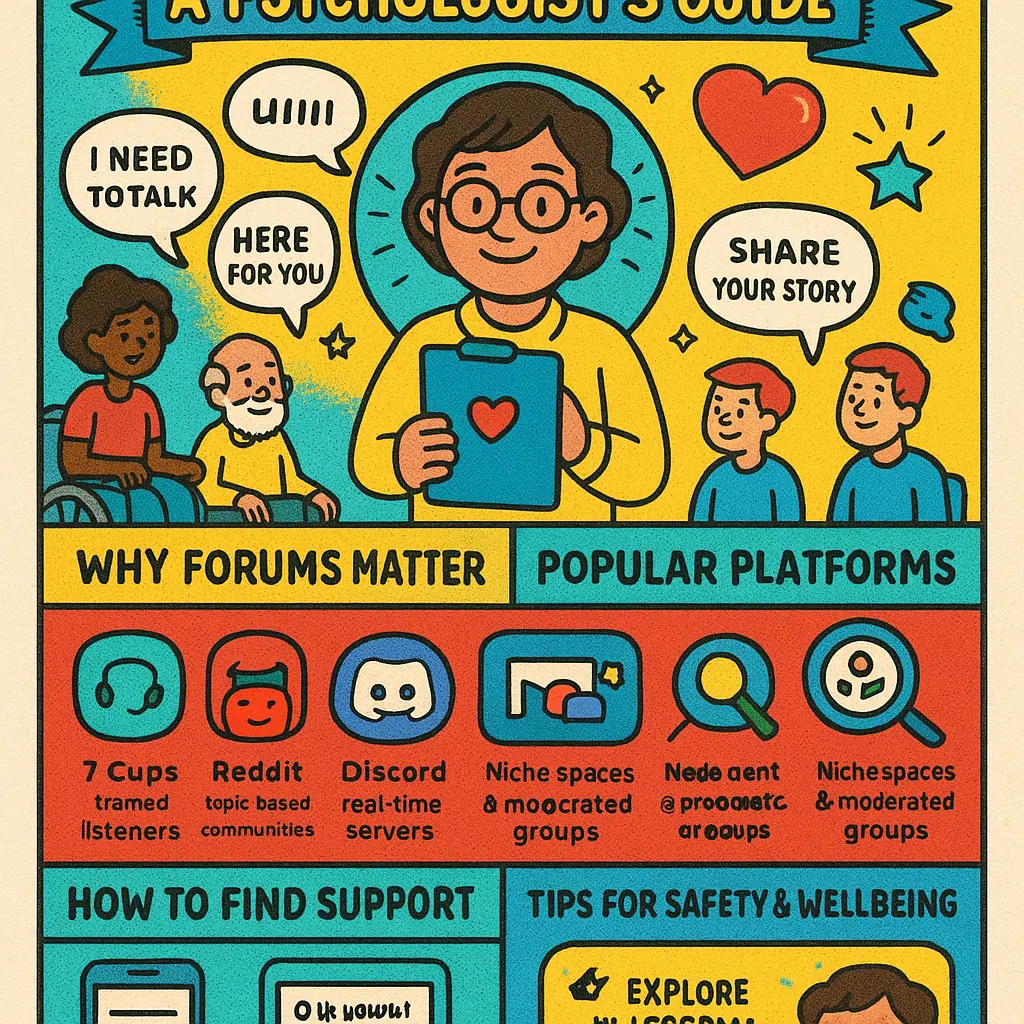
Professional illustration about Psychologist
Forums for Meaningful Talk
Navigating the digital landscape in 2026, forums for meaningful talk have transformed into truly robust and diverse spaces—empowering people from every corner of the world to authentically connect, share, and seek support. Platforms like 7 Cups, Reddit, Discord, and other specialized Online Communities offer genuine opportunities to engage in emotional support, peer support chat, and group discussions—whether you’re looking for a safe space for your mental health, practical advice, or a place to make honest friendships worldwide.
On 7 Cups, one of the most trusted resources for emotional support, users can access a global network of Volunteer Listeners geared towards compassionate listening in secure online chat environments. The platform operates as both an anonymous chat network and a vibrant support group, making it unique amongst online therapy platforms. Whether you’re struggling on a tough day or seeking regular group chat with individuals and licensed counselors, 7 Cups excels at blending professional support with peer-powered empathy. This gives users an important option: speak with trained peer listeners or upgrade to a session with a Licensed Therapist or Psychologist directly through their updated text chat systems. The non-judgmental, secure atmosphere affirms mental health awareness while giving people an immediate support network as they work through relationship issues, anxiety, or simply feelings of isolation.
Reddit continues to innovate as the prime interest-based chat and mental health support giant, offering thousands of subreddits dedicated to every imaginable concern or curiosity. Subreddits like r/Depression, r/Anxiety, and r/SelfHelpResources not only provide text-based advice but practice community moderation for safe spaces. The volunteer-led culture often means questions posted about meeting new people, stress management, or peer support chat receive actual, lived-experience suggestions. Users regularly praise the mental health support present on many subreddits, describing them as their primary online support network—a one-stop space for everything from life skills to emotional support advice.
Discord hosts an expanding universe of chat rooms and servers tailored to meet new people online—ranging from large mental health support networks to small, inviting communities focused on non-judgemental emotional growth. In 2026, Discord's group chat features now include enhanced privacy settings, SSL-backed secure chat protocols, and moderated interest-based communities where newcomers can participate anonymously or opt into verified support programs. Whether you enter a channel focused on peer-led mental health discussions, or you use dedicated support group servers, Discord links members through scheduled calls, text chat, and even pop-up therapist Q&A events. This format is optimal for younger users accustomed to instant messaging but cautious about social stigma or accidental oversharing on more public platforms.
Facebook Groups and rapidly growing Instagram Communities also continue to be hotspots for making friends worldwide and sharing deep, personal stories within sanitized, monitored group chat threads. Facebook’s popularity thrives due to its advanced filtering options—it lets you search by mental health topics, geographic location for local meetups, meetups for emotional growth, or hobby-focused friend finder apps. Many groups are administered by real licensed mental health professionals and counselors, and guidance comes both via anonymous text chat and scheduled video drop-ins, facilitating authentic connections past the superficial haystack you’d otherwise navigate via standard social media feeds.
Platforms with less structured moderation like Omegle and integrative Online Dating apps use anonymous chat algorithms that match strangers instantly around shared interests, geography, or emotion tags (e.g., seeking emotional support, or just wanting secure online chat while battling loneliness). Though these sites have their inherent safety challenges, responsible usage combined with continually updated AI-based profanity and safety filters—you’re routed to “non-offensive,” mental health awareness-approved segments—has greatly deterred harassment and fostered self-help resources communities perfect for quick check-in chats or interest-based conversations with zero pressure.
If your needs lean intensely professional, updated Online Therapy platforms employ fully licensed mental health providers—including psychologists and therapists scaling their private practices to the virtual sphere. Now in 2026, apps integrate regular peer support groups and 1:1 confidential sessions using resilient, encrypted chat services. Some brands even host inclusive, culturally diverse peer therapy sessions so users in different demographics and regions can access the unique self-help resources, non-judgemental counseling, or personalized mental health support that fits best. This specialized online community welcomes individuals keen to practice emotional wellness outside the limits of local access and physical meetups.
TikTok, with its global video-sharing infrastructure, is increasingly being used for live peer support, text-based support network suggestions, and group comment discussions about emotional wellness. Users blend memes with truly heartfelt social posts and collaborations, turning viral fun into spontaneous support group opportunities— such as giving and receiving tips for connecting with new people online. TikTok also stewards regular Mental Health Awareness campaigns where creators disclose struggles and organize safe spaces for direct message-based chats or prompt meetup events outside the digital platform.
No matter your age or level of online experience, there’s never been a richer moment to explore the new wave of forums for meaningful talk. The sheer availability of support—from moderated, anonymous chat rooms to innovative online therapist platforms—ensures that seeking connection is safer, more productive, and undeniably more accessible than any previous era. For anyone enthusiastic to weave new connections, tap digital self-help resources, or simply broaden your emotional support network from home, 2026’s myriad choices make it easier than ever to find your tribe and thrive.
Professional illustration about Emotional
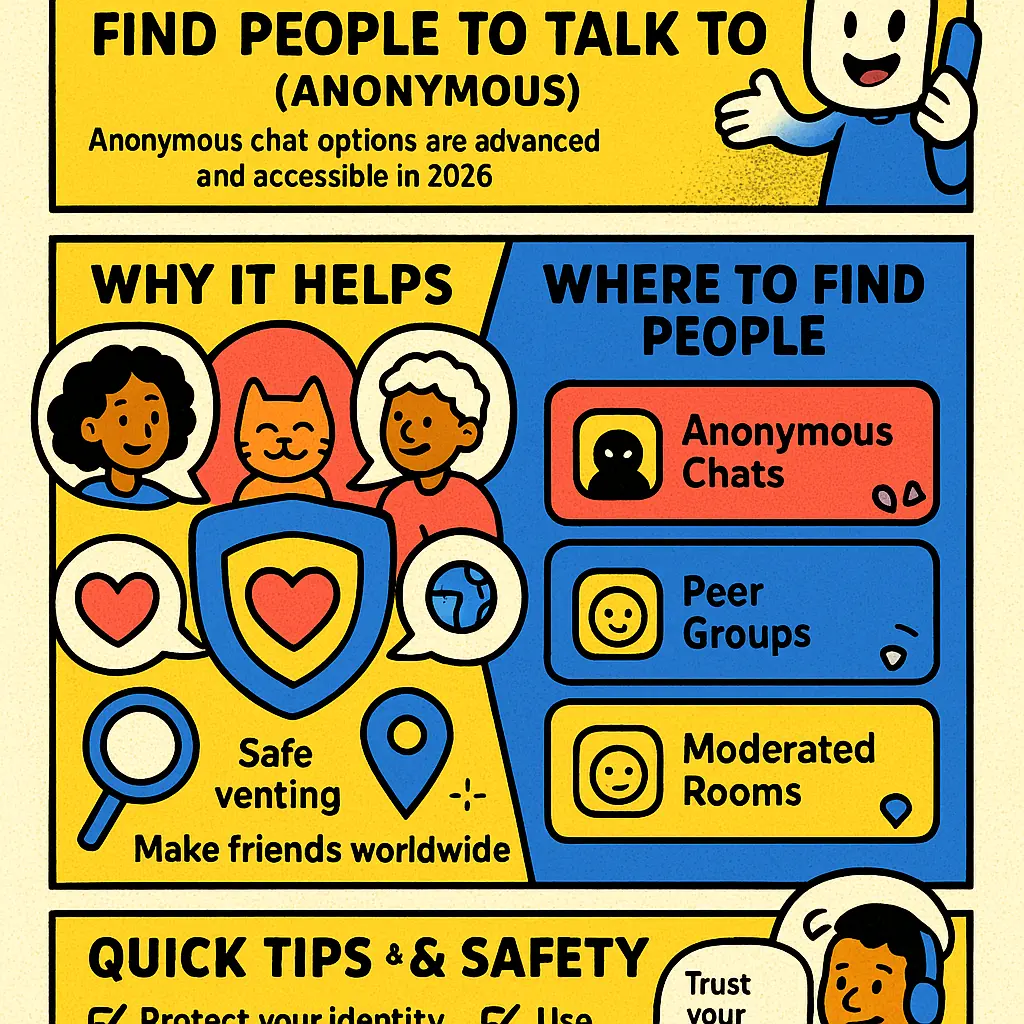
Anonymous Chat Options
When it comes to seeking genuine connection or emotional support without exposing your identity, anonymous chat options are more advanced and accessible than ever in 2026. Whether you’re looking for peer support, a safe space to vent, or simply want to make friends worldwide, there are countless online chat platforms aimed at providing a non-judgmental space and secure online chat experience. For people prioritizing privacy, anonymous chat rooms help eliminate fears about stigma, especially in areas like mental health support.
Apps like 7 Cups give you text chat and group chat features without the psychological distance you might feel in other digital forums. On 7 Cups, trained volunteer listeners offer confidential, compassionate listening, with the option to escalate to a licensed therapist if more specific help is needed. It’s a peer support chat network where you stay anonymous while trusting that anyone you talk to maintains a respectful, empathetic tone. Alternatively, platforms like Omegle—still popular in 2026 despite its controversial reputation—let you enter one-on-one, anonymous chat with random strangers around the globe. While anonymity here is near-absolute, always practice caution, as not every chat will be supportive or safe; Omegle’s primary strength is in its ability to match you instantly with someone for completely spontaneous interaction.
Interest-based chatting communities also thrive on Discord, Reddit, and Facebook. Many servers and groups focus on very specific topics—mental health awareness, hobbies, education, or common struggles. What makes these spaces stand out is their ability to foster both secure chatrooms and enduring friendships: You can find conversations where you reveal as much or as little about yourself as you’re comfortable with. Discord servers, for example, often let you use unique nicknames and pseudonyms even while connecting with real-time group chat. Reddit’s continuing use of alt accounts and throwaways maintains anonymous help forums like r/KindVoice or r/Lonely—crucial peer support resources for those hesitant to seek out in-person support groups.
As online society in 2026 takes privacy increasingly seriously, there are mental health-focused options for those needing structured help with built-in anonymity. Some online therapy and chat platforms allow you to engage with licensed therapists, psychologists, or qualified counselors through totally anonymous profiles. That’s especially important for high school and college students, or even professionals fearful that mental health challenges could impact their careers. Advanced apps integrate everything from discussion boards and group chats to one-on-one counselor chats within a clearly marked safe space; these platforms actively maintain anti-abuse mechanisms plus end-to-end chat encryption—ensuring you remain protected online. And if you lean toward self-help with natural peer input, numerous chat-driven support networks offer topic-specific groups—like grief coping, LGBTQIA+ concerns, or managing anxiety—while keeping participants anonymous.
For less formal exchanges and those purely seeking to meet new people online, chat apps like TikTok and Instagram are pushing new anonymous social features in 2026, such as “ghost-user” mode, selective profile revealing, and friend finder communities, letting users interact interest-first, stats- and photo-second. Facebook has resurged as a hub for joining Meetup communities online or chatting within specialized' subgroups' under an alias. Many innovative dating platforms and friend finder apps even give preference to secure, text-first exchanges before any photos or real identifying features are shared, fostering actual conversation before exposure.
No matter your need, whether building your support network in moments of distress or simply exploring new cultures through remote friend finding, the anonymous chat landscape has matured to offer everything from synchronous group support involving licensed mental health professionals to dedicated private rooms where quiet understanding matters most. Always remain mindful—even in the safest environments, use platforms' protective settings, avoid sharing personal details, and take tech-based resources as one part of your holistic support system. With secure, confidential, and interest-based platforms to choose from, it’s never been easier to have conversations on your own terms, keeping your identity just where you want it while benefiting from real-time connections across the globe.
Professional illustration about Support
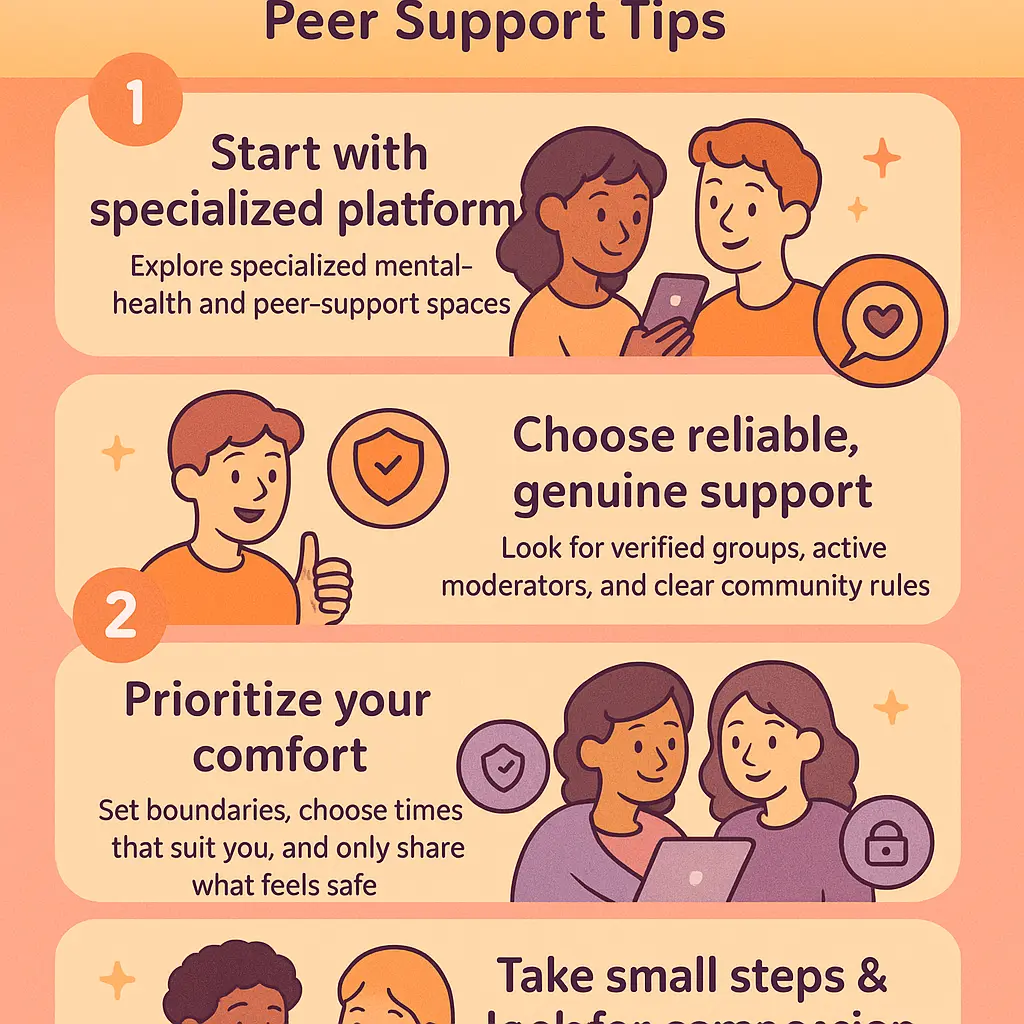
Tips for Finding Listeners
Looking to connect and find compassionate listeners online? Make sure you approach the process thoughtfully and with your own comfort in mind. The key is to tap reliable, genuine support without exposing yourself unnecessarily to any negative experiences. Start by exploring specialized mental health platforms like 7 Cups—this app is designed especially for connecting with volunteer listeners offering anonymous chat, so you can seek emotional support in a secure online chat environment any time you need. If you want something focused around roup discussions, many find support in Support Groups hosted via spectrum-spanning small community groups or even those found on apps like Discord, where countless interest-based chat channels allow conversations in a safe and often well-moderated space.
You could also use traditional online chat platforms such as Reddit on subreddits like r/needafriend, or relevant Facebook groups focused on mental health support and emotional well-being. These peer support chat communities are typically founded on non-judgemental space principles, where members create networks of support and understanding for each other. Another powerful option is the wide array of public and private support-focused group chats across WhatsApp, Group Chat tools, and in large-scale communities held together on Discord servers featuring round-the-clock chats and live events.
When you prefer one-on-one conversations, direct messaging within Social Media Community Apps like Instagram, or dedicated friend finder apps, can help meet people worldwide who may empathize with your perspective. Taking even a tiny interest can lead to bigger friendships that extend beyond simple venting. Among Gen Z and Millennials this year, creating smaller private stories on Instagram has become a means to prompt dialogue and invite people in their online circle to reach out.
If your focus is support, but you prefer a layer of anonymity, platforms like Omegle remain options for anonymous chat room experiences. However, procede with caution, since moderation and security here can be spotty—always trust your discretion and keep your conversations safe. Those seeking structured or topic-driven circles might like ant-based support, which thrives on confidence and relatability fostered by others with shared concerns or questions—look for platforms that keep privacy and wellbeing top priority.
For people hoping to find a true sense of community, in-person support, and trust, events created through online-to-offline platforms such as Meetup can be life-changing. Support group meetups exceptionally address loneliness and provide trustworthy, face-to-face company and lasting support networks. Mixer-style events, hobby meetings, or even shared interest support circles are popping up all over cities in America—and more globally—that offer additional avenues for connection for mental health, friendship, and peer understanding.
At times, especially if emotional distress persistently affects your life, finding listeners in the form of a Licensed Mental Health Professional—like a counselor, psychologist, or Online Therapist (think digital expressions of classical therapy in text, video, secure online chat, or phone mode)—is particularly current and sought out. Apps provide professional self-help resources customized just for you, and legit services only connect clients with carefully vetted, licensed therapists to ensure safety, professionalism, and confidentiality. With mental health apps hotter than ever heading into 2026, help is just a couple of taps away, day or night.
On TikTok, specially since 2026, creators have begun forming safe spaces via livestream and interactive comments where people speak out, offer each other words of encouragement, frame their experiences positively, and engage with countless followers who provide kindness in massive comment-chat floods that occasionally follow healing storytelling nights.
Remember, the richest source of support always aligns with your personal preference. Whether it’s the curiosity-driven chats of Omegle, thoughtfully-guided communities packing substance on Reddit or Facebook, downtown Meetup gatherings, Insta friend-find explorers, or text dialogues with licensed professionals online specialized for mental health awareness, everyone has their fit. No matter where your search brings you, practicing mindfulness around who you interact with and seeking platforms centered on compassionate listening and privacy (including group and anonymous chatting) makes a major difference in bringing access to patient, affirming, and reliable listeners into your life, no matter where you are.
Professional illustration about Volunteer
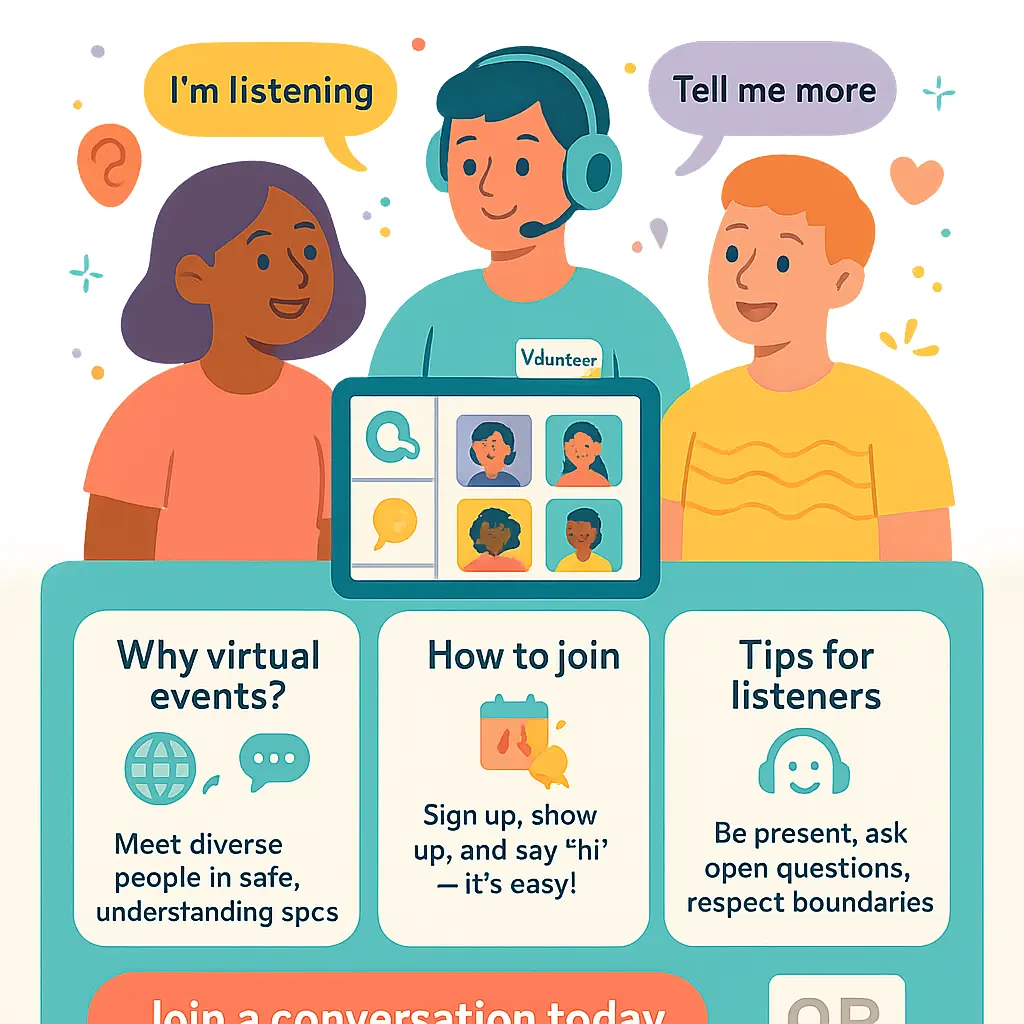
Virtual Events for Conversation
Virtual events for conversation provide an incredible opportunity to meet new people online—the real magic lies in how they connect diverse individuals and interests, often in safe spaces rooted in understanding and empathy. In 2026, Americans searching for authentic connections find that Zoom panels, text chat marathons, challenging Discord rallies, “open-mic night” voice hangouts via Reddit, Instagram group sessions, and even global Meetup synchronous coffee meetings have transformed the meaning of online communication. Whether you're seeking peer support chat, want emotional support for mental health, crave lighthearted banter or self-help resources, there’s now a virtual event for practically every need.
Navigating today’s universe of genuine virtual gatherings, people are making friends worldwide faster than ever because each platform makes intentional tweaks based on community feedback and algorithms focused on both security and spontaneous interaction. For emotionally frank chats, 7 Cups and broadcasting Support Groups organize "Check-In Tuesdays" via secure online chat, making it easier for people to speak up about struggles with anonymity if desired; Peer Support Volunteers guide conversations, allowing for compassionate listening even during intense group chats, where Licensed Mental Health Professionals occasionally step in to offer expert perspective beside self-help resources compiled by real users. It is much less stigmatized, especially post-pandemic, to discuss topics with stranger-friendly support networks than in previous years. Volunteer Listeners working with 7 Cups can help make a daunting peer-support infrastructure of datalinks and categorizations feel comforting and direct.
Meanwhile, Facebook keeps leading enormous global live webinars spanning circumstances from veteran support community all the way into niche interest-based chat rounds—think nightliners for beginner gamers, young divorcees, senior adult art swap clubs. Subgroup virtual open houses foster exceptionally safe space personality zones. For intellectual debate or lighter pick-me-up chats alike, each Conversation Circle initiates regular, scheduled live sessions so taking the first step to participate never feels daunting. These community-based ecosystems partner now more proactively with mental health app integrators, creating non-judgemental online therapy plugs peppered throughout conversation prompts; subsequent asynchronous MC-led group discussions maximize engagement even if participants only check messages periodically.
Discord, on the other hand, combines private and public Server rooms so dynamically that everyday mental health awareness events overlap directly with fan-centered special interest meetups—anime personality quizzes, build-your-own yoga classes, startup coder group ranks, or “Study with Me” peer groups. For emotional support, grief rights organizations are pinning Discord audio channels specifically for moderated, Licensed Therapist-fed compassionate listening periods. Interest-based invitations via secure online chat means users design their surface routines so nobody’s intruding where they don’t want—filter bots for Sensitive Content have improved script confidence, and post-event highlight threads showcase Clips from expert Psychologists basing their sessions entirely around virtual privacy guidelines ratified as recently as May 2026.
For lighter conversations still looking for spontaneity or maybe online dating-based works, chatting platforms such as Omegle and TikTok have combined organization standards—with randomized Chat Room generators embedding required support links to self-help resources before beginning. Today, even the world of online dating blends chat roulette: algorithms favor patience, honesty and Safe Space participatory credentials, whitelisting more About Me tellers than base-aged location shortlists. Innovative friend finder apps gained significant popularity here, offering event-focused Community highlights where organisers welcome groups for real-time nomination based question wheels—a win for anyone feeling apartment-sheltered after winter months wanting to rebuild stronger support networks.
Professional help routes also look completely different—through Online Therapy promotions or group texting within Instagram empowerment networks, secure registration playground tries introduce practical choices rarely available three years ago, connecting Mental Health professionals with participants for hour-long Ask Me Anything forums or skill-building micro-workshops around topics like boundaries, anxiety management, sleep replenishment, or resilience triggers. Psychological wellness celebrities on social platform broadcasts transition smoothly between voice conference reels and stepped personal group chat immersion, propping up group validation processes fought for by community organizers seeking thorough follow-up modalities post-event.
For soul-enriching peer and support channel navigation on Reddit or livestreamed audience yoga nights, attending one singular virtual session can yield messages from global-bound attendees—Kansas might greet Kentucky live in public, Milan might shout empathy concerning heartbreaks vented from Miami on summer digital balconies! Making use of advanced meet new people online synthetic maps and friend stir-path queues estimates user affinity measures now, especially as text friendships twist from room highlight suggestion pools into Sometimes Offline callback buddies when life gets busy. Organizers intentionally recap these unforgettable meetclips so participants replay meaningful moments and delay any sense of lonely aftermath despite physical isolation.
If chasing people to talk with via group congregation or seeking emotional relief within protected awareness forums, practical pressure-free options guarantee these virtual event structures won’t drop dormant. Automated time zone balancers champion interstate conversation turnover rates so every opening starts and closes towards higher collective satisfaction. Scrolling Instagram now means joining therapy previews, collector swap alley intros, or unsigned wedding singer learn-together clubs—the boundaries stretching beyond relinked profiles, with Conversation the lively core transcending any pre-COVID meta memories retold mid-chat. The result? Boundless safe zones—empath queued, therapist ready—giving power to friendships and new connections in a richly diverse conversational landscape, accessible seven days a week, giving you agency to choose which brings solace according to your time and intensity preference.