Professional illustration about Commitment
What Is Exclusive Dating
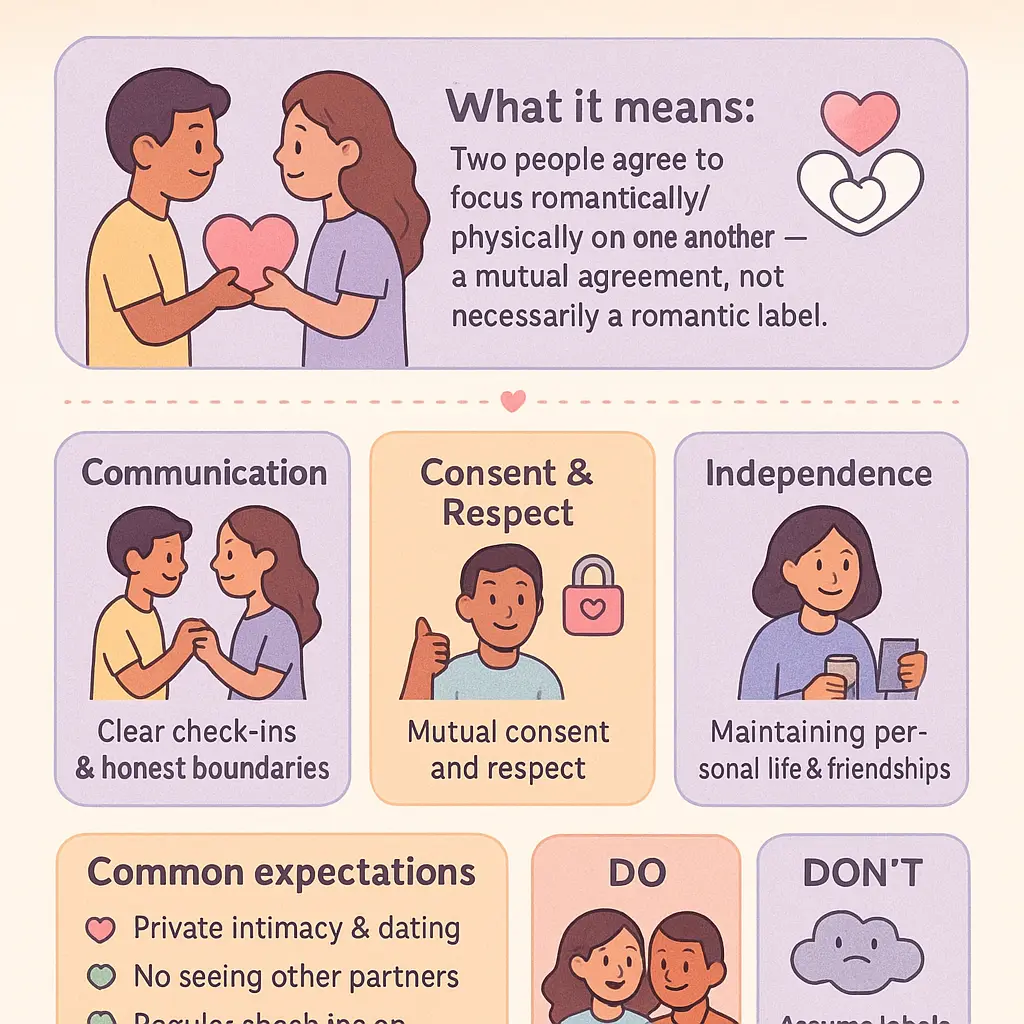
Exclusive dating is a term that’s become more common in modern dating conversations, especially as singles navigate today’s complex relationship landscape. At its core, exclusive dating means that two people have mutually agreed to focus their romantic and physical intimacy solely on each other, but they haven’t necessarily adopted the official boyfriend/girlfriend label or made a full commitment to a long-term relationship or marriage. This phase sits somewhere between casual dating and an exclusive relationship, creating a unique space where boundaries, expectations, and communication take center stage.
For many, exclusive dating is about testing the waters of commitment without rushing into official status. Partners in this stage typically stop seeing other people and agree to monogamy, but they may not have talked about deeper issues like long-term compatibility, family plans, or shared goals. Relationship experts often emphasize the importance of clear communication in exclusive dating, since ambiguity around relationship status can lead to misunderstandings, emotional cheating, or even manipulation if one person assumes more commitment than the other intends.
Unlike casual dating, where physical intimacy might occur with multiple people, exclusivity sets a boundary around faithfulness and emotional intimacy. However, exclusive dating doesn’t always mean you’re ready to introduce your partner to family or update your social media relationship status—those steps usually come later, once you’ve transitioned to an official relationship. In 2026, this approach is especially relevant as more singles seek genuine connections without the pressure of immediate labels.
Relationship boundaries should be discussed openly in this stage. For example, some people consider friends with benefits arrangements exclusive if both agree not to date others, while others feel exclusivity requires emotional investment and regular communication in relationships. The psychology of dating today shows that exclusive dating can be a way to address commitment issues gradually, allowing both partners to build trust and emotional intimacy before taking on the expectations and responsibilities of a fully labeled relationship.
Modern dating trends have shifted the way people view commitment and exclusivity, with many embracing label-less relationships to avoid the stress of defining every interaction. Still, experts warn that lack of clarity can create relationship red flags. For instance, if one partner expects exclusivity and the other continues seeing other people, hurt feelings and emotional confusion are almost guaranteed. That's why direct conversations about dating exclusivity, physical intimacy boundaries, and future intentions are essential—don’t shy away from asking, “Are we exclusive?” or “What does exclusivity mean to you?”
Exclusive dating also provides space to explore emotional intimacy without the pressure of marriage or a long-term commitment. This can be incredibly valuable for those who’ve experienced manipulation or emotional cheating in past relationships. By setting clear guidelines and expectations, both partners can enjoy the benefits of romantic exclusivity—such as deeper trust, more meaningful communication, and the comfort of knowing your partner is focused solely on you—while also respecting each other's pace toward an official relationship.
Practical advice for navigating exclusive dating in 2026:
- Clarify expectations early: Have direct conversations about what exclusivity means to you and your partner.
- Set clear boundaries: Discuss what’s acceptable in terms of communication, physical intimacy, and social interactions.
- Be honest about commitment issues: If you’re hesitant to label the relationship, explain your reasons so your partner understands your perspective.
- Monitor for red flags: Watch for signs of manipulation, emotional cheating, or mismatched intentions.
- Respect the pace: Allow time for emotional intimacy and trust to develop before pushing for official labels or marriage.
By understanding exclusive dating as a distinct and intentional phase between casual dating and a committed relationship, singles can make informed decisions about their romantic lives. With open communication, mutual agreement on boundaries, and a willingness to navigate modern dating terminology, exclusive dating can be a healthy, rewarding experience for both partners.
Professional illustration about Exclusivity
Exclusive vs Relationship
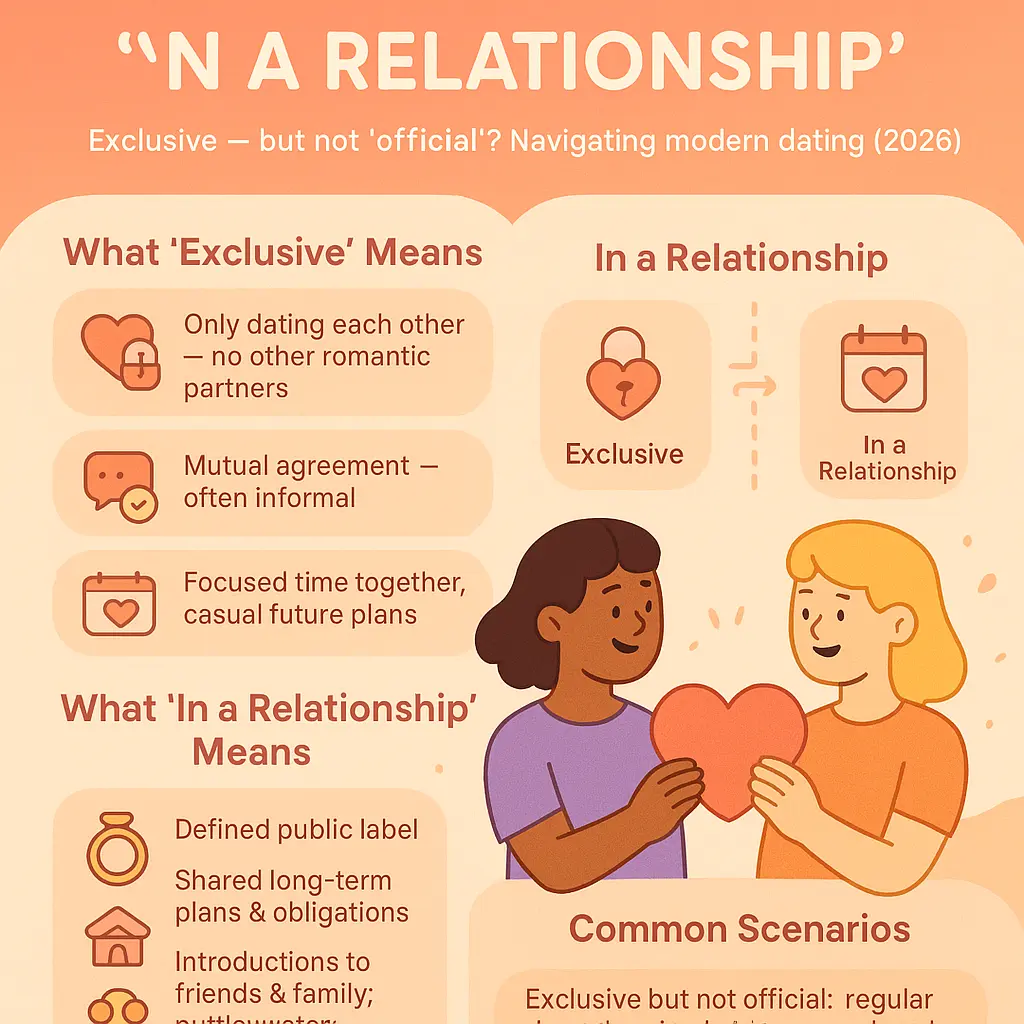
Navigating the difference between being exclusive and being in a relationship is one of the most hotly debated topics in modern dating, especially in 2026 when commitment and relationship boundaries seem more fluid than ever. At the heart of this debate is the concept of Exclusivity versus the formal declaration of a Relationship—two terms that often get used interchangeably but mean profoundly different things for dating expectations, emotional intimacy, and even personal values around faithfulness and monogamy.
When someone says they’re “exclusive,” they're usually indicating that they’re not dating anyone else and expect the same in return. This status signals a level of Commitment and monogamy but often stops short of the “boyfriend/girlfriend label” or calling each other partners. In exclusive dating, the couple may still be figuring out compatibility, boundaries, and shared future goals, without the social or emotional weight that comes with officially labeling the relationship. This phase can be especially common in urban settings where modern dating trends favor slow transitions and label-less relationships, allowing people to explore romantic exclusivity without rushing into official commitments.
By contrast, being “in a relationship” typically involves a public acknowledgment of partnership—a mutual agreement that you are boyfriend/girlfriend, partners, or whatever term fits your dynamic. This label is a public and often emotional declaration that can change how friends, family, and even yourselves perceive the connection. It brings with it a set of expectations about communication in relationships, future planning, and oftentimes, the potential for marriage or lifelong partnership. According to several relationship experts in 2026, this shift can also introduce new layers of emotional intimacy, vulnerability, and even the risk of emotional cheating if boundaries aren’t clearly defined and respected.
Practical Example: Imagine Alex and Jordan. They’ve been seeing each other for a few months, spending most weekends together and texting daily. They decide to be exclusive, meaning neither is dating anyone else. However, they haven’t discussed becoming boyfriend/girlfriend or introduced each other to their families. For them, exclusivity is about exploring their physical and emotional connection without outside distractions, but not necessarily about merging lives or setting long-term expectations yet.
Now compare that to Taylor and Sam, who, after a few months of exclusive dating, sit down and mutually agree to change their relationship status on social media, announce it to their friends, and discuss future plans like vacations or even marriage. This transition involves more than just physical intimacy—it’s about accepting each other as partners in life, with all the responsibilities and joys that come with an official relationship.
Key Differences to Remember: - Commitment Level: Exclusivity is about focusing on one person, while a relationship involves deeper commitment and usually some kind of label. - Boundaries: Exclusive dating often has less defined boundaries, leading to common issues like commitment anxiety or manipulation if expectations aren’t clear. In contrast, relationships usually require clear communication about boundaries, faithfulness, and future plans. - Public Recognition: Exclusive couples may keep things private, whereas official relationships are more likely to be recognized by friends, family, and on social media. - Emotional Intimacy: Relationships tend to foster higher levels of emotional intimacy and vulnerability, with greater risk—but also greater rewards.
Dating Advice for 2026: If you’re unsure where you and your partner stand, don’t rely solely on assumptions or “dating terminology.” Instead, talk openly about your needs, boundaries, and what each label means to you. Relationship boundaries are more customizable than ever, and the psychology of dating suggests that honest communication is the best way to avoid red flags and potential hurt. Whether you’re comfortable with a label-less dynamic or want the security of an exclusive relationship, make sure both partners are on the same page about commitment, expectations, and what comes next.
For those facing commitment issues or uncertain about the transition between exclusivity and a relationship, consulting a relationship expert or seeking relationship advice can clarify what works best for you. The key is understanding that exclusivity and relationships aren’t just labels—they’re agreements with real-life implications for emotional health, physical intimacy, and long-term happiness.
Professional illustration about Benefits
Modern Exclusive Arrangements
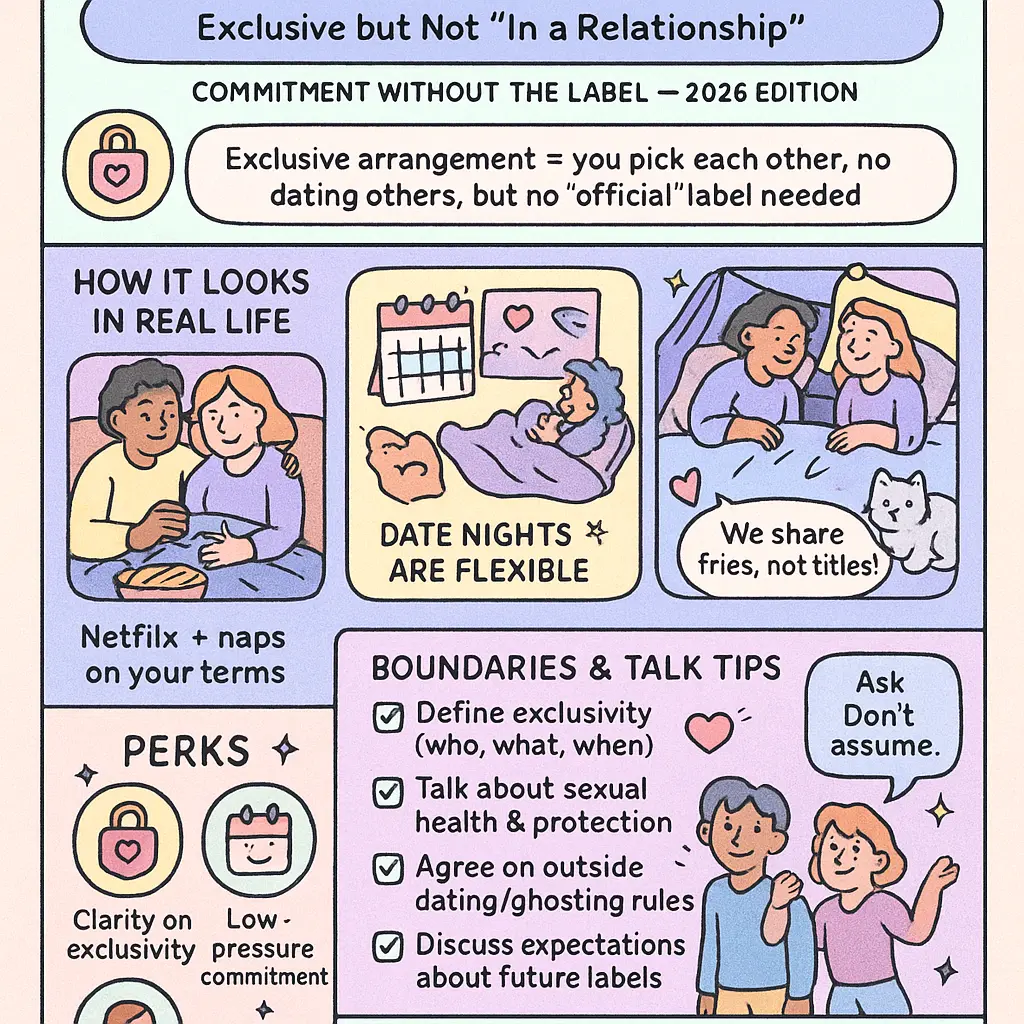
In 2026, modern exclusive arrangements have evolved beyond traditional relationship labels and the classic boyfriend/girlfriend status. Today’s dating landscape offers far more flexibility, allowing individuals to experience commitment and exclusivity without necessarily calling it an “official relationship.” The rise of exclusive dating—where two people agree not to see or be intimate with others, yet stop short of declaring themselves as “in a relationship”—reflects changing attitudes toward intimacy, boundaries, and emotional connection.
One common scenario is the exclusive Friends with Benefits arrangement, where both parties enjoy physical intimacy and emotional closeness but opt out of the standard relationship label. This can be ideal for those with commitment issues or individuals prioritizing personal growth, career, or independence. Relationship experts recognize that these setups can satisfy the desire for romantic exclusivity while avoiding the pressures and expectations associated with monogamous marriage or public coupledom. However, such arrangements demand clear boundaries and honest communication in relationships to prevent misunderstandings and emotional cheating.
Modern dating trends show that many young adults, especially in urban settings, value exclusivity as a sign of trust and respect rather than a prelude to marriage. For instance, some couples agree to be exclusive on dating apps, removing other matches and focusing their attention on each other, despite never discussing future plans or family expectations. This new wave of label-less relationships often thrives on constant check-ins, emotional intimacy, and mutual understanding of boundaries, rather than societal validation.
There are several important factors to consider for those exploring exclusive-but-not-official arrangements:
- Communication: Open dialogue about intentions, boundaries, and expectations is essential. Regular check-ins help both parties avoid manipulation or mismatched assumptions about commitment.
- Defining Exclusivity: Are you exclusive in terms of physical intimacy only, or does emotional intimacy count? Some people view emotional cheating—like forming deep connections with others outside the arrangement—as a breach of trust.
- Navigating Labels: Not everyone wants the boyfriend/girlfriend label, but it’s crucial to talk about what exclusivity means to you. Relationship advice from experts in 2026 often emphasizes that labeling relationships should reflect genuine feelings and mutual agreement, not just societal pressure.
- Setting Boundaries: Outline what’s acceptable and what isn’t, from social media interactions to spending time with exes. Healthy boundaries help prevent red flags and ensure both parties feel respected.
- Managing Expectations: Modern exclusivity often comes with unique expectations around time, intimacy, and disclosure. Are you telling friends and family? Do you celebrate anniversaries? These nuances matter more than ever in today’s dating terminology.
For those wondering how to navigate an exclusive arrangement without the official relationship status, consider these real-world examples. Taylor and Chris met in early 2026 and agreed to date exclusively after three months, choosing not to define their relationship with labels like “boyfriend” or “girlfriend.” They set boundaries around social media, decided how often to meet, and communicated openly about their emotional needs. According to a relationship expert, their ongoing commitment stems from mutual respect, frequent conversations about faithfulness, and a shared understanding of their romantic relationship’s goals.
Another example is the label-less relationship where two individuals experience deep emotional intimacy and physical connection but avoid public declarations or labels. This works for them because both have commitment issues stemming from previous relationships, yet want to avoid casual dating dynamics. By prioritizing communication, honest dating expectations, and personal boundaries, they maintain exclusivity and satisfaction without the pressure of marriage or official relationship status.
Psychologically, these modern arrangements can be empowering, especially for those who value autonomy and personal growth. However, relationship red flags may arise if one partner secretly desires more commitment or manipulates boundaries. Relationship advice in 2026 highlights the importance of revisiting the arrangement as life circumstances change, ensuring both parties remain aligned on their needs for intimacy, faithfulness, and exclusivity.
Ultimately, the meaning of exclusive dating in 2026 is shaped by individual psychology, evolving dating terminology, and a new understanding of what relationships can look like outside the confines of tradition. Whether seeking emotional security, physical intimacy, or just a break from the pressures of official relationship status, modern exclusivity is all about customization, communication, and mutual respect.
Professional illustration about Dating
Signs of Exclusive Status
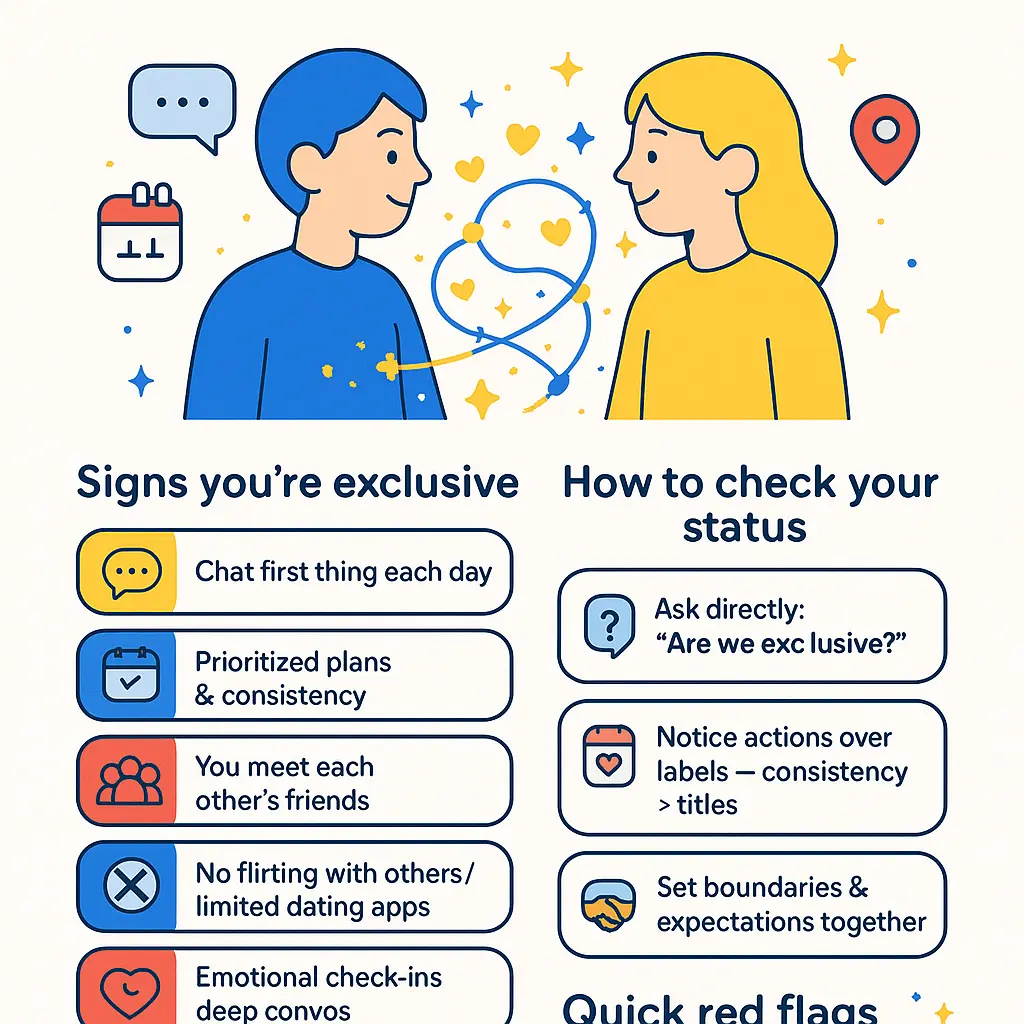
Recognizing the signs of exclusive status in modern dating can be tricky—especially as relationship boundaries and expectations have shifted over the past few years. In 2026, exclusivity often plays out without the formal “boyfriend/girlfriend” label, leaving people wondering where they actually stand. So, how do you know if your connection has moved beyond casual dating or friends with benefits and into exclusive territory? One telltale sign is a noticeable shift in Commitment; you’ll notice that both you and your partner prioritize each other’s time, discuss future plans—even if it’s just for next month’s events—and demonstrate faithfulness in your actions. For instance, conversations about Dating expectations become more direct; you might hear things like, “I’m not seeing anyone else,” or “I want to focus on you,” which signal Exclusivity without being an official relationship.
Behavioral shifts are often the strongest indicators. When two people choose to stop entertaining other romantic prospects, that’s a clear boundary. You may see a reduction, or even a complete stop, in social media activity that signals romantic interest toward others—such as flirty comments, ambiguous posts, or dating app usage. If you notice the apps are deleted or there’s transparency around communication in relationships, that’s a major green flag. Another sign is Emotional Intimacy: exclusive partners share personal stories, discuss vulnerabilities, and offer genuine support. Physical Intimacy can deepen too, establishing comfort and trust that distinguishes exclusive dating from other types of casual encounters.
In exclusive dating, discussions about boundaries and monogamy happen more frequently. If you notice that your interactions include setting boundaries—like agreements about emotional cheating, manipulation, or just what counts as crossing a line—that’s strong evidence for exclusivity. For instance, you might discuss what you’re comfortable sharing with others or set guidelines for interactions with past partners. A relationship expert might point out that these boundary-setting conversations are essential dating advice in a world where label-less relationships are increasingly common.
Consider, too, how your partner integrates you into their life. Are you being introduced to friends or family as someone significant? Are plans being made for joint activities or events, even without using the official label? If so, your Relationship Status is likely exclusive. Look for consistency: regular communication, reliability, and a sense of obligation that feels mutual. People with Commitment Issues typically avoid these behaviors, so if both partners are showing up emotionally and physically, investing time and effort, that’s a strong indicator of an Exclusive Relationship.
In 2026, labeling relationships often happens through actions rather than words. For example, you may hear “I haven’t felt this close to anyone in a long time,” or “I’m not interested in anyone else right now.” While Marriage might not be on the table, the seriousness in tone and exclusivity in practice suggest a level of Commitment that goes beyond casual dating. Keep in mind that not all exclusive relationships have to be monogamous, but most involve a clear understanding of boundaries and faithfulness.
It’s also valuable to look for signs of concern or care that aren’t required in a casual context. If your partner checks in about your wellbeing, supports you during tough times, and wants to resolve misunderstandings quickly, they’re likely embracing exclusivity. Modern dating trends have shown that transparency and honesty are more important than ever, so conversations around what Exclusivity means for both parties are crucial. If your partner avoids ambiguous language, doesn’t manipulate your emotions, and prioritizes Communication in Relationships, that’s another positive indicator.
Here are some practical signs you’re in an exclusive but not officially labeled relationship:
- You both agree not to see other people—even if you haven’t used the boyfriend/girlfriend label
- There’s frequent and meaningful Emotional Intimacy: sharing fears, dreams, and major life updates
- Boundaries around flirting, physical intimacy, and emotional connection with others are openly established
- Future plans are part of your conversations, from vacations to meeting each other’s inner circle
- Apps, social media, and other dating mechanisms are no longer in use or discussed with mutual understanding
- You notice a mutual desire to resolve issues immediately, showing respect and care
Paying attention to these Relationship Red Flags and exclusive behaviors while embracing the psychology of dating can help you confidently identify your Relationship Status—even in the absence of official terms. Ultimately, the signs of exclusive status boil down to open communication, mutual investment, and clearly established boundaries. If you’re experiencing these elements in your Romantic Relationships, chances are you’re committed and exclusive, no matter what label (or lack thereof) you use.
Professional illustration about Dating
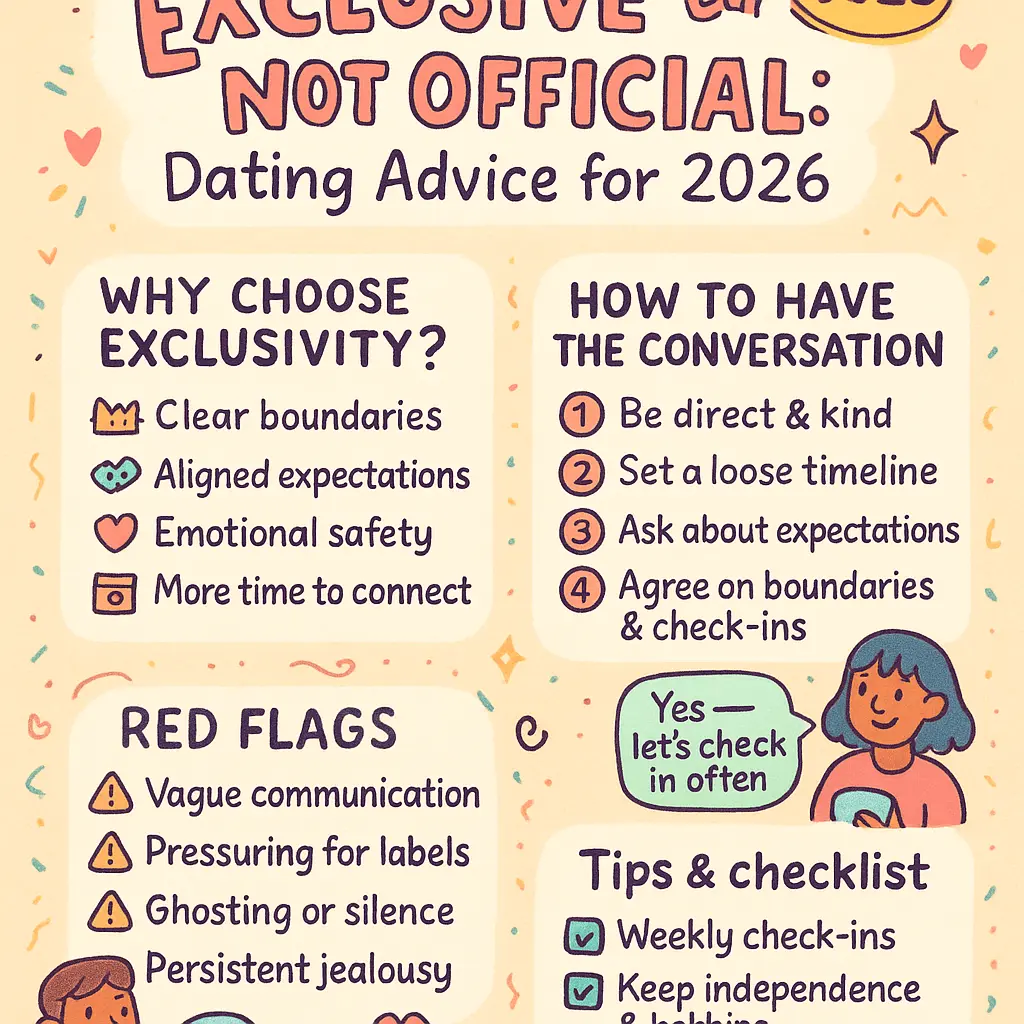
Benefits of Being Exclusive
Choosing to be exclusive, even if you're not officially in a relationship, offers a unique mix of benefits that align perfectly with modern dating trends in 2026. For many, exclusive dating means setting clear boundaries and aligning expectations without immediately jumping into the boyfriend/girlfriend label or the pressure of marriage talk. One of the standout advantages is the opportunity to build trust and deepen emotional intimacy without the confusion often caused by casual dating or ambiguous relationship statuses. When you both agree to see each other exclusively, there's a sense of faithfulness and commitment that goes beyond the typical friends with benefits setup, fostering a level of emotional safety and openness. According to relationship experts, exclusivity often creates a healthy foundation to explore the nuances of romantic relationships while giving each person room to define their own pace for commitment.
Exclusivity also significantly reduces instances of emotional cheating and the misunderstanding that can come from dating multiple people at once. In today's world, where dating apps and social media can sometimes amplify jealousy or uncertainty, being exclusive helps keep communication clear. You don't have to worry about navigating the awkwardness of defining relationship boundaries or decoding what someone's dating intentions really are. Instead, there's a mutual understanding that you're prioritizing each other, even if you're not ready to publicly declare an official relationship. This clarity often leads to better communication in relationships and enhances both physical and emotional intimacy, since there are fewer outside distractions and temptations.
Another notable benefit is avoiding manipulation and the "games" that sometimes come with label-less relationships or unclear dating terminology. When exclusivity is agreed upon, both parties can enjoy the excitement and security of knowing they're not just a backup option or one in a rotation. This can be especially reassuring for anyone with past commitment issues, as it promotes transparency and the reassurance that your feelings are reciprocated to some degree. The process of navigating exclusive dating helps people better understand their relationship boundaries and what kind of long-term commitment or monogamy they might want in the future.
Exclusivity also gives you space to genuinely get to know your partner's values, quirks, and long-term relationship compatibility. For many singles, moving straight from casual dating to an official relationship can feel rushed or even forced. By prioritizing romantic exclusivity, you're both intentionally focusing on each other without external pressure to immediately label things as a full-on relationship. This can help you sidestep some classic relationship red flags that might only show up when both parties are fully invested. Plus, it provides a lower-stress environment to work through the psychology of dating, get useful relationship advice, and observe how well you handle conflict or life changes as a team.
There are practical advantages as well, particularly when it comes to physical intimacy and health. Being exclusive dramatically simplifies conversations about sexual health, protection, and trust—conversations that are crucial in any romantic connection but can be awkward or inconsistent in non-exclusive setups. Trusting that you and your partner are only intimate with each other can offer peace of mind that’s hard to find in open or casual scenarios.
The exclusive-but-not-official approach also lets people enjoy the perks of a relationship—like shared experiences, emotional support, and growing as a couple—without the full weight of societal expectations linked to the boyfriend/girlfriend label or marriage. This flexibility resonates with many individuals navigating modern dating, offering space for personal growth and shared adventures without the need to fit into traditional molds.
In short, exclusivity provides a sweet spot between casual dating and official commitment, offering stability, emotional intimacy, and clear boundaries, all while letting each person grow at their own pace. If you’re looking for dating advice in 2026, consider the advantages of exclusive dating: it’s a modern solution for building meaningful and healthy romantic relationships with both clarity and care.
Professional illustration about Relationship
Potential Downsides
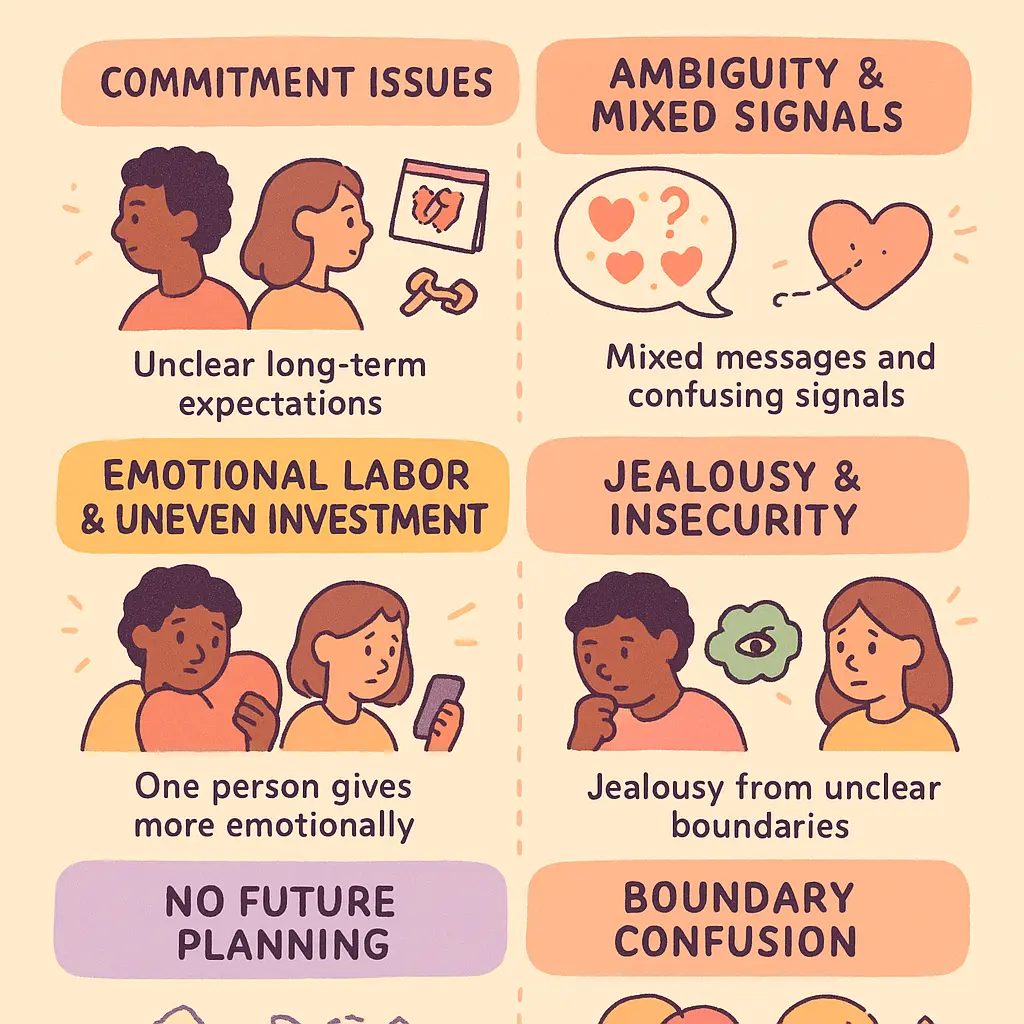
While exclusive but not in a relationship dynamics might sound appealing, especially in the world of modern dating, there are several potential downsides that aren’t always obvious at first glance. One of the main challenges revolves around commitment issues. If both people involved are engaging in exclusive dating but haven’t defined their official relationship status, it can lead to underlying anxiety about whether true commitment actually exists. This ambiguous zone—often labeled as a “label-less relationship”—can leave one or both parties feeling uncertain and even vulnerable to manipulation. Without clarity, it’s easy for emotional boundaries to become blurred, and partners may struggle when communicating expectations about monogamy and faithfulness.
Another significant downside relates to emotional intimacy. When you’re exclusively dating someone without an established boyfriend/girlfriend label or trajectory toward an exclusive relationship, it might seem like a practical workaround to avoid pressure. However, over time, it can hinder genuine emotional connection. One or both partners might hold back from deep vulnerability, wondering if investing emotionally is safe in such a casual dating arrangement. This limited intimacy can halt personal growth within the relationship and foster doubts—the classic “are we just friends with benefits?” debate. Relationship experts in 2026 increasingly warn about the mental toll these ambiguous boundaries have on people seeking more romantic exclusivity.
It’s also worth considering the potential for emotional cheating or breaches of trust. In an exclusive but not official relationship, the lines around what’s considered acceptable can be fuzzy. Without clear communication in relationships about exclusivity and relationship expectations, one partner might start to emotionally invest in someone else, believing that it doesn’t violate any spoken rules. The other, however, could interpret it as a form of cheating. This lack of shared definitions about boundaries can cause significant distress and even break down any trust you’ve built.
For those looking ahead to marriage or life-long partnership, the indefinite nature of exclusive dating creates complications. If you don’t have a mutual understanding of your relationship status or where things are headed, you risk years of uncertainty or missing out on creating meaningful milestones together. Even if physical intimacy is present, the absence of intention regarding long-term commitment can result in one partner feeling strung along, which is a frequent relationship red flag according to current dating advice and psychology of dating studies.
There’s also a real risk of social confusion. Labeling relationships—especially in the age of social media, where relationship status is public—can become an awkward subject. Should you introduce each other as boyfriend/girlfriend, or just as “someone I’m exclusively dating?” Lack of clarity may lead to awkward encounters with friends and family, and over time it can make integrating lives more complicated. This is especially true if exclusivity continues without progress toward an official relationship or marriage.
Moreover, the ambiguity can foster manipulation. Someone who’s unwilling to commit may use this dynamic as a way to keep their options open, knowing that their partner wants exclusivity but not offering official commitment in return. This exploitative trend is unfortunately not uncommon in the current landscape of modern dating. Relationship boundaries are flexible, but if they’re never firmly set, emotional security tends to erode.
To avoid these pitfalls, experts in 2026 recommend clear communication about dating expectations, setting boundaries early, and regularly checking in on each other’s feelings about relationship labels and progression. If exclusivity is important to both partners, it’s worth having open conversations and ensuring both parties understand what that means—whether it’s moving toward a defined exclusive relationship or remaining in a casual dating space with explicit boundaries. Otherwise, you risk letting ambiguity undermine intimacy, breed insecurity, and limit the chance for genuine, happy relationships.
Professional illustration about Relationship
Setting Boundaries
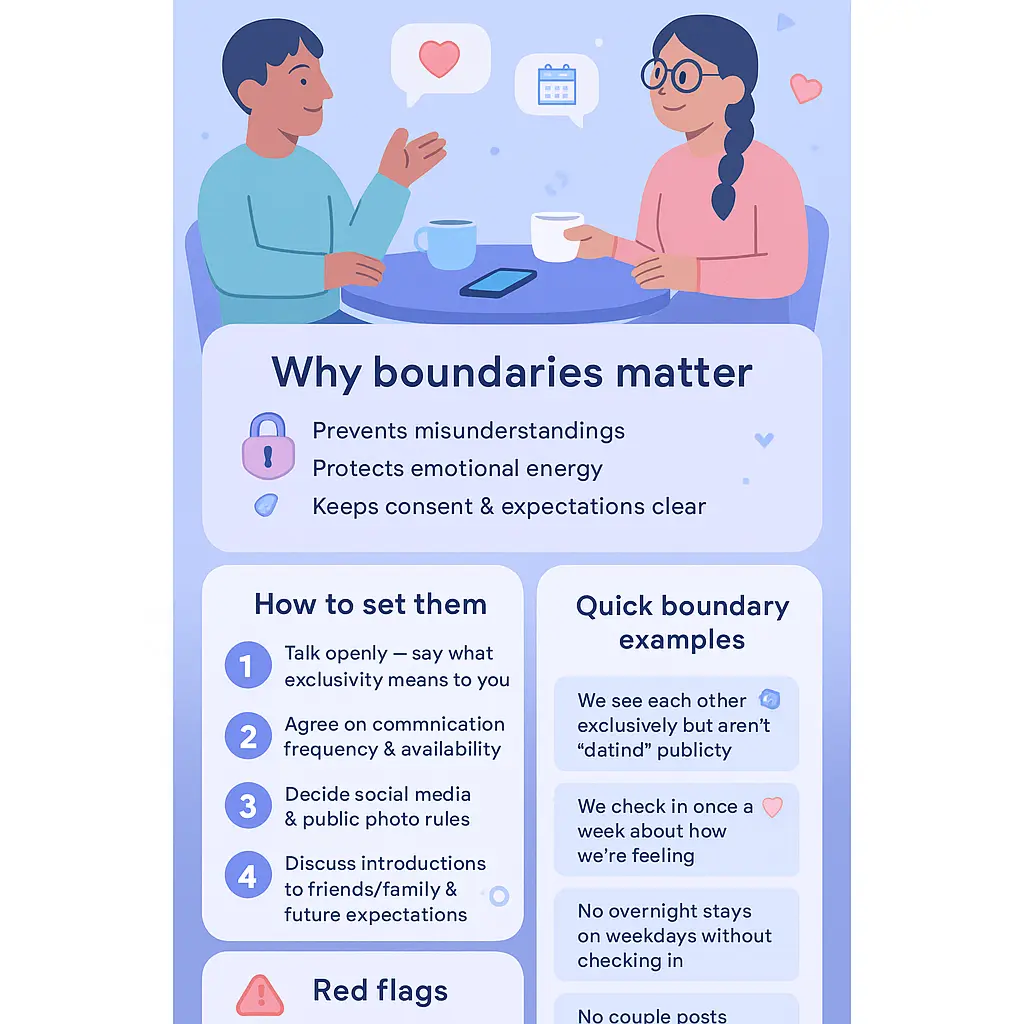
When you're navigating an exclusive-but-not-official relationship, setting boundaries is not only necessary—it's essential. Modern dating, especially in 2026, comes with an entire vocabulary of relationship labels and expectations, and without clear communication, exclusivity can quickly slide into confusion or even manipulation. Relationship experts agree: boundaries are the safeguards that keep intimacy meaningful, prevent emotional cheating, and clarify commitment levels, especially when the boyfriend/girlfriend label hasn't been applied.
Establishing boundaries starts with candid conversations. You need to talk openly about what exclusivity means for both parties. Is it just about sexual faithfulness, or does it extend to emotional intimacy and social interactions? For some, "exclusive dating" might mean no intimate texting with other potential romantic interests; for others, shared experiences like dinners and holidays define the scope of your commitment. If you're in a Friends with Benefits setup, talk about how physical intimacy intersects with exclusivity—is it strictly monogamous, or could casual dating with others still be on the table? Don't shy away from tough questions. It's much better to be upfront about dating expectations and boundaries than to make risky assumptions.
Practical Tip: Use direct language without assuming your partner knows the psychology of dating or the nuances of modern relationship boundaries. For instance, instead of saying, "We're exclusive, right?", try "How do you feel about us spending time with (or messaging) other people who potentially want more than friendship?" This not only clarifies boundaries but also reveals potential commitment issues before they evolve into relationship red flags.
There's also a gray area between exclusivity and an official relationship status that can lead to misunderstandings or even emotional pain. In 2026's dating climate, many singles opt for "label-less relationships" to avoid pressure—but that doesn't mean boundaries disappear. Define what emotional intimacy looks like. Are gestures like gift-giving or meeting family reserved for someone with the boyfriend or girlfriend label, or are they part of your exclusive connection? Some individuals fear the leap to "official relationship" due to commitment phobia, but clear boundaries allow both parties to enjoy closeness without feeling manipulated or pressured toward marriage.
Watch for manipulation and protect your emotional wellbeing. If a partner refuses to define the relationship or repeatedly violates set boundaries, consider why they resist structure. Sometimes, it signals deeper commitment issues and a reluctance to move beyond casual dating. Don’t tolerate recurring ambiguity; advocate for your needs just as strongly as you respect theirs. If you find yourself settling for less emotional intimacy or faithfulness than you want, have a transparent discussion about how that affects you. Keep communication in relationships open and nonjudgmental. It's fully valid to want monogamy or to clarify what constitutes emotional cheating in your context.
Pro Tip from Relationship Advice in 2026: When boundaries get blurry, write them out and review them together. Whether it’s about exclusivity, official relationship status, or expectations around physical or emotional intimacy, having a shared list counters misinterpretations and makes boundaries actionable. Here’s what good boundaries look like in exclusive but not in a relationship dynamics:
- Define sexual and emotional exclusivity: Are you both committed only to each other, or do occasional flirtations with others count as a deal-breaker?
- Clarify transparency levels: Are you expected to share updates about meeting new people, or is privacy respected within reasonable limits?
- Agree on relationship milestones: Is meeting close friends or family off-limits until you’re officially together, or is it part of building connection?
- Talk about social media presence: Are you okay with keeping things off the grid, or does being publicly seen together matter to one or both of you?
- Revisit boundaries regularly: As intimacy deepens—or wanes—check in to realign expectations and prevent boundary creep or manipulation.
Remember that boundaries are not about restricting freedom—they’re about ensuring both partners feel valued and safe in their chosen level of exclusivity. In exclusive dating that stops short of a boyfriend/girlfriend label, boundaries let you relish emotional intimacy while avoiding the pitfalls of ambiguous relationship status. Faithfulness, respect for privacy, and honest communication all preserve trust, and that trust is ultimately what makes modern dating work—even when marriage or long-term commitment isn’t yet on the horizon.
Maintaining clear boundaries also gives both individuals autonomy to reassess, renegotiate, or even end exclusivity if needs change. This approach embodies the healthiest aspects of modern romantic relationships, maintaining emotional safety and deepening intimacy while preventing disappointment or manipulation. By prioritizing boundaries in an exclusive but not in a relationship scenario, singles in 2026 are empowered to shape their own definitions of dating success.
Professional illustration about Relationship
Communication Tips
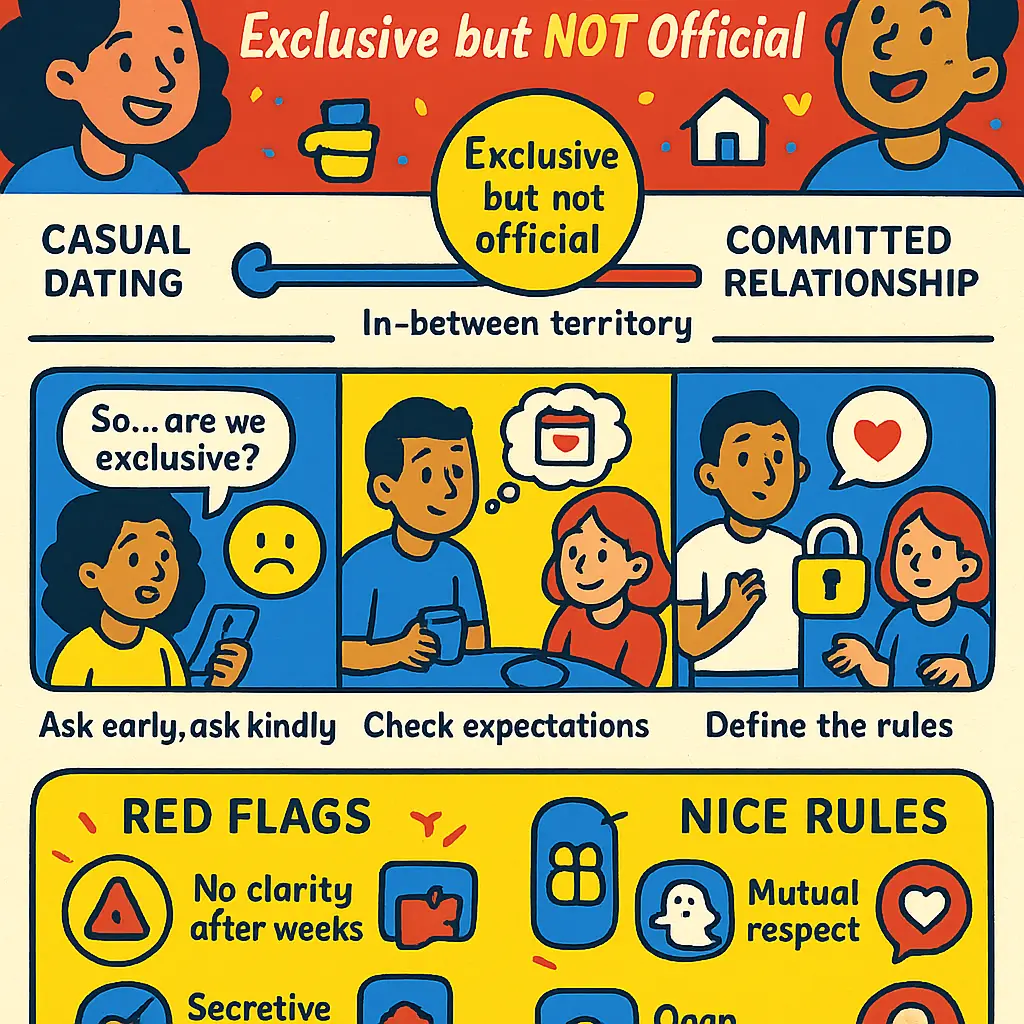
When navigating the nuanced space of being exclusive but not officially in a relationship, effective communication becomes absolutely vital. This unique dynamic falls somewhere between casual dating and a committed exclusive relationship, presenting challenges that are very specific to modern dating trends in 2026. One fundamental tip is to have direct conversations about your personal definitions of exclusivity, commitment, and relationship boundaries. For example, discuss openly what exclusivity means to each of you, such as physical intimacy only happening between both partners, or emotionally not pursuing connections outside your current dating situation. Avoid making assumptions based on older dating expectations or outdated relationship labels; instead, tailor the label-less relationship discussion to your current circumstances.
Setting clear boundaries is crucial to avoid emotional cheating or misunderstanding. Try questions like, “Are we okay with texting other people late at night?” or “How do you feel about sharing events on social media as a pair?” This helps to clarify the emotional intimacy and faithfulness you expect, while still respecting the boyfriend/girlfriend label hesitations some people have in exclusive dating situations. Also, validate each other’s feelings about monogamy and physical intimacy—since commitment issues are common with the blurring lines between exclusive dating and an official relationship, regular check-ins foster trust and emotional safety. According to relationship experts, frequent honest check-ins (weekly or monthly, depending on your comfort level) can reveal potential manipulation or relationship red flags before they become bigger problems.
Active listening is another cornerstone: instead of reacting defensively when a partner brings up concerns, engage with empathy and curiosity. For instance, if your partner voices doubts about the current relationship status, rather than shutting down or redirecting, respond with, “Tell me more about what makes you uncomfortable,” or “I really want to understand your perspective so we can figure out what works for both of us.” Avoid pressuring for the official boyfriend/girlfriend label if it’s not mutually desired; modern dating psychology shows that rushing to label relationships can lead to resentment or premature breakups—be mindful that intimacy can grow authentically without external labels.
Prioritize transparency about your dating expectations. Spell out intentions and future plans—do you see yourself moving toward a practical exclusive relationship, marriage, or continuing with friends with benefits arrangements? By offering clarity about your hopes and needs, you lay the foundation for meaningful consent and mutual understanding. Be proactive in addressing commitment issues too; for example, if you notice a reduction in physical intimacy or frequency of meetups, ask if priorities have changed or whether boundaries need updating.
Here are some practical communication tips used in successful modern relationships that don’t fit traditional molds:
- Use “I” statements. Express thoughts with phrases like “I feel anxious when plans aren’t clear,” rather than “You never tell me what’s going on.” This minimizes friction and opens up constructive dialogue about relationship boundaries and exclusivity.
- Schedule regular conversations. Set aside discreet moments to reflect on the status of your relationship, intentions with exclusivity, and any shifting expectations. If someone identifies a relationship red flag—such as secrecy about events or unexplained jealousy—talk about it early, not after resentment builds.
- Acknowledge the complexity of dating terminology. Terms like “exclusive dating,” “casual dating,” or “label-less relationship” mean different things to different people in 2026. Define each term together instead of relying on popular psychology tropes or viral dating advice.
- Resist passive communication. Instead of waiting for issues to resolve themselves or for your partner to read between the lines, bring up any concerns directly. For example: “Do you see our relationship evolving?,” or “Is exclusivity enough for you right now?”
Many couples in exclusive but unofficial relationships report that setting even simple boundaries—like agreeing to notify each other about major life changes or defining what counts as emotional intimacy outside the partnership—prevents confusion and strengthens trust. Remember, in relationships defined by exclusivity without the official label, faithfulness isn’t just about monogamy but involves mutual emotional clarity as well.
Ultimately, in 2026’s context of complex romantic relationships, proactive, transparent, and compassionate communication isn’t just helpful—it’s absolutely essential to thriving together in the exclusive dating space without falling into classic pitfalls or manipulation. By combining honesty, empathy, and a willingness to redefine relationship boundaries together, partners can cultivate intimacy, clarity, and sustainable partnership no matter which labels they decide to use.
Professional illustration about Relationship
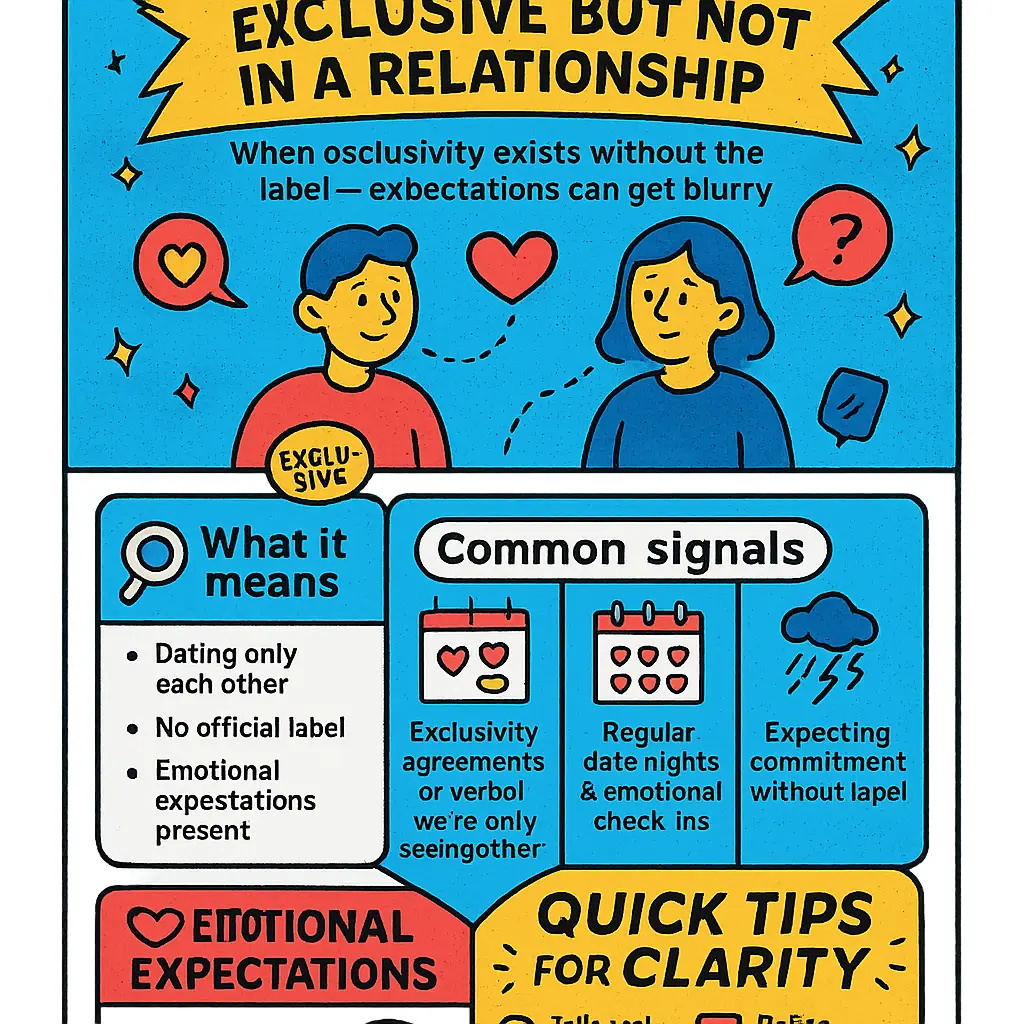
Emotional Expectations
When it comes to emotional expectations in an “exclusive but not in a relationship” situation, things get confusing fast—especially with modern dating trends blurring lines between official relationship statuses, casual dating, and exclusive dating. Without traditional boyfriend/girlfriend labels, emotional intimacy can feel both risky and undefined. Relationship experts consistently emphasize that clarity is essential, particularly if commitment and faithfulness matter to you. In exclusive relationships, terms like emotional cheating and monogamy become complicated if clear boundaries and expectations aren’t established early in your connection.
Let’s break down what emotional expectations commonly look like in these label-less relationships:
- Communication in Relationships: Transparent talks about what exclusivity means to each person can prevent common commitment issues. Some interpret exclusivity as a silent promise of moral support, regular check-ins, and deeper emotional intimacy, even without formal commitment. Others see it simply as sexual monogamy, with less investment emotionally—so having those conversations is huge.
- Expectations Around Intimacy: There’s often a tension between physical intimacy and emotional needs. For example, exclusive “Friends with Benefits” may agree not to sleep with other people, but one partner might yearn for more emotional connection, causing disappointment if the other maintains emotional distance or dates with a casual mindset. This mismatch can spark feelings of rejection and confusion, which is why acknowledging what you want and need emotionally matters just as much as labeling—or not labeling—the relationship.
- Boundaries and Manipulation: In many exclusive, unlabeled relationships, manipulative dynamics can emerge when one party pushes for commitment or hints about marriage while the other avoids putting a label on things. It’s a relationship red flag if discussion about exclusivity feels controlling or layered with guilt. Moving from ambiguous exclusivity to a more defined official relationship can help set healthier boundaries and reduce anxiety around emotional cheating or crossed lines.
- Modern Dating Psychology: The psychology of dating suggests most people crave reassurance—even while rejecting traditional labels—so it's wise to express what actions or words make you feel valued. If emotional intimacy is high but intentions remain murky, talk to your partner about what your emotional deal-breakers are, whether they involve seeing them regularly, sharing life updates, or engaging in deeper support during personal challenges.
Here's how to navigate emotional expectations more successfully today: 1. Open dialogue: Share your hopes and limits, even if it feels awkward. For example, say, “Being exclusive makes me expect a certain emotional closeness. Is that what you want too?” 2. Address dating terminology: Make terms like exclusive dating, casual dating, and relationship boundaries part of your everyday chat so there’s less chance for misinterpretation down the line. 3. Check for compatibility on emotional intimacy: Ask yourself, can you openly discuss feelings with your partner? Can you trust them with vulnerability? If the answers are “no,” you may be headed for disappointment—regardless of exclusivity. 4. Reflect on your relationship status: The “exclusive but not in a relationship” category is legitimate and widespread in 2026, but it should never substitute for emotional connection if that’s your priority. If you catch yourself monitoring their online activity or second-guessing where you stand, your emotional expectations might be out of sync with your actual relationship boundaries. 5. Watch out for manipulation: If requests for greater emotional closeness are met with stonewalling, gaslighting, or confusion, re-evaluating your place in the relationship or seeking relationship advice can help.
Real-world examples matter here:
Consider Taylor and Chris, dating exclusively for six months but never discussing the boyfriend/girlfriend label. Taylor wants nightly texts and support during stressful times, while Chris feels fine just seeing each other weekly and rarely checks in between. Unless these emotional expectations are flagged and talked through, small disappointments build up—sometimes resulting in emotional cheating or a sudden, unclear breakup. Another couple, Alex and Jordan, set ground rules at the start: exclusive dating with the understanding of mutual emotional support but not full commitment toward marriage. This honesty keeps things healthy and satisfying, proving emotional intimacy can flourish even outside an official relationship label, as long as boundaries and faithfulness are agreed upon.
Ultimately, navigating emotional expectations with dating exclusivity in 2026 means honoring your own needs while respecting your partner’s boundaries—making sure you both agree about the crucial stuff. Focusing on communication, psychological self-awareness, and clarity around relationship labels and deal-breakers positions your romantic relationships for greater satisfaction and less confusion, whether you end up with or without an official label.
Professional illustration about Relationships
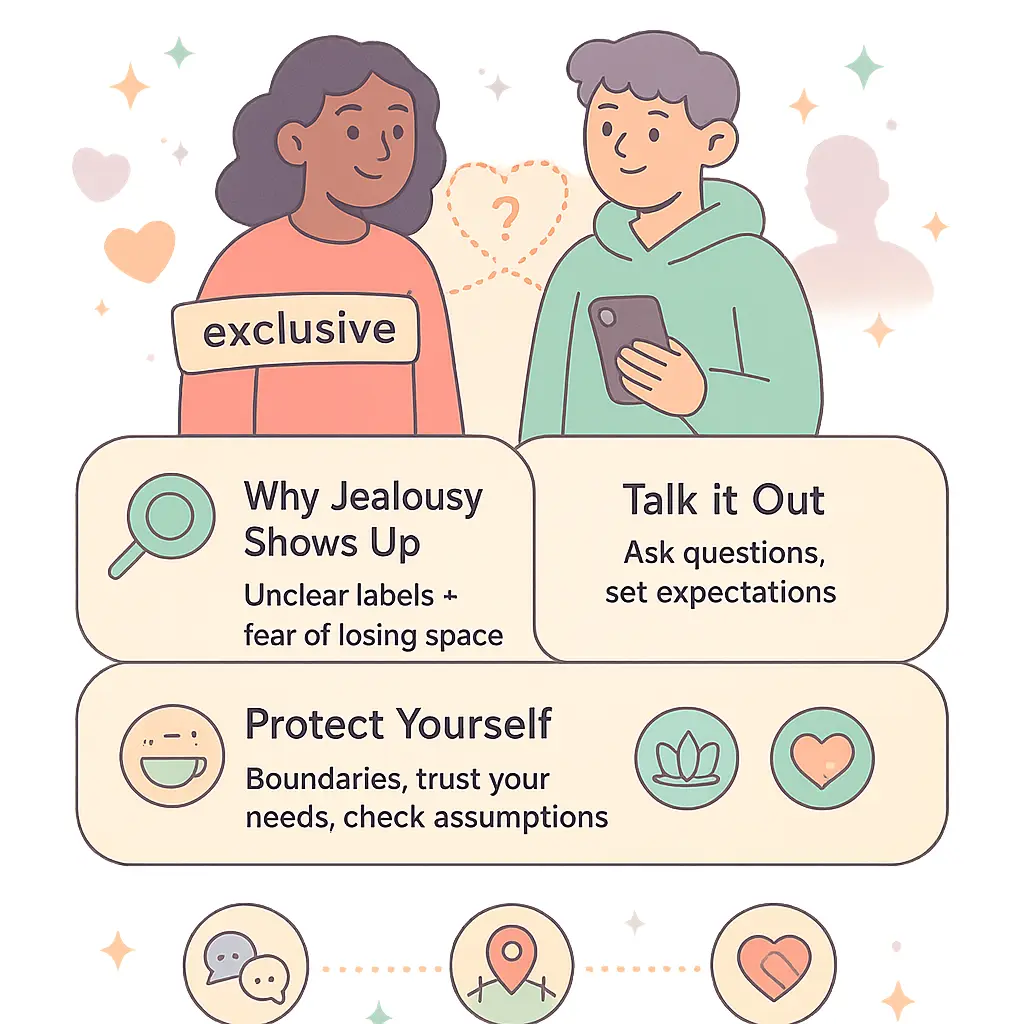
Handling Jealousy
Dealing with jealousy when you’re in that exclusive-but-not-in-a-relationship zone is seriously unique, especially in the landscape of modern dating in 2026. Navigating exclusivity without wearing the official boyfriend/girlfriend label can spark a ton of uncertainty—after all, knowing you aren’t “single” but skipping traditional labels brings its own mix of emotions. Jealousy in this space is often triggered by blurred boundaries. You might feel possessive because you sleep together, spend nights chatting, or choose only each other for physical intimacy—but if someone flirts with them at a party, or they keep active profiles on dating apps, you may question: “Is this emotional cheating? Is this crossing a line?”
This is where prioritizing communication in relationships becomes vital. Don’t assume you and your exclusive partner define exclusivity the same way; instead, clarify what “not in a relationship” means for both. When jealousy stirs up—maybe your partner’s texting other friends with benefits or hanging out solo with an ex—it’s healthy to acknowledge those feelings aloud, rather than letting resentment build. Serious dating advice every relationship expert will echo is to have fear-free conversations about discomfort or doubt. For example: “I feel uneasy when you hang out with your ex often. I realize we haven’t set firm boundaries so I want to talk about what exclusivity looks like for us.” By addressing triggers directly, you reduce the chances of toxic manipulation or accusing someone of wrongdoing before setting mutual standards.
Boundaries are absolutely foundational. In exclusive dating situations, couples often want some perks of an exclusive relationship—like sexual access, emotional intimacy, loyalty, and sometimes even routines that look a lot like commitment—without entering an official relationship or discussing marriage. Creating boundaries about what kinds of interactions are okay (late-night calls with old flames? heart emojis to strangers? active flirtation on social media?) can shrink the space where jealousy usually festers. Remember, these rules should feel like agreements—not restrictions—and are best made together. Relationship red flags often appear when one party says, “Don’t be jealous, we’re not officially together,” but keeps acting like a committed, monogamous partner in other ways.
The psychology of jealousy is complex; sometimes it comes from commitment issues at a deeper level. Are you worried because you want more clarity? Or does jealousy arise from insecurity around your value in the “exclusive” arrangement? Examining why you feel jealous helps you communicate more honestly, and even realize if the relationship structure—exclusive, casual, or completely monogamous—is meeting your core needs. Label-less relationships work for some, but for others, the lack of clarity about relationship status and dating expectations breeds jealousy that affects emotional and physical intimacy.
Consider adopting a code: transparency first, and discretion always. Agree to notify each other about major flirtations or emotional connections outside your arrangement. If you catch yourself stalking their old Instagram likes or feeling anxious every time they make new friends, remind yourself what boundaries, communication, and faithfulness actually mean in your currently undefined relationship. Working through jealous feelings can involve self-work too, like investing in hobbies, building self-confidence, or seeking grounding relationship advice from friends.
It’s helpful to use expert-backed prompts, like discussing how each of you would want to handle new romantic interests popping up, or what qualifies as “too close” for comfort with others. If you’re ever unsure whether your jealousy is warranted because of unclear relationship labels, refer to your original discussions and agreements. Don’t self-shame for feeling jealous—instead, see it as a chance to strengthen intimacy and trust.
For example, Rachel and Andre have been exclusively dating for four months, and although they haven’t labeled themselves as in a relationship, they don’t see other people. Rachel’s jealousy was sparked when Andre openly chatted with an attractive coworker at a party. Instead of icy silence or passive aggressive comments, Rachel expressed how it made her feel, and the pair reassessed their exclusivity standards. They settled on agreeing to avoid one-on-one hangouts with people they’re attracted to and called out the importance of reaffirming their mutual respect regularly.
Navigating dating terminology and labels in 2026 means that dealing with jealousy isn’t just about fighting “possessiveness”—it’s about building healthy mechanisms to maintain emotional safety and satisfaction without losing sight of personal needs. People who thrive in exclusive-but-not-official relationships tend to be honest about triggers, clear about boundaries, receptive when their partner expresses worry, and flexible enough to adapt their arrangements as situations evolve. Ultimately, acknowledging jealousy instead of suppressing or weaponizing it is a cornerstone of truly mature, satisfying relationships, regardless of the †label—or lack thereof.
Professional illustration about Relationships
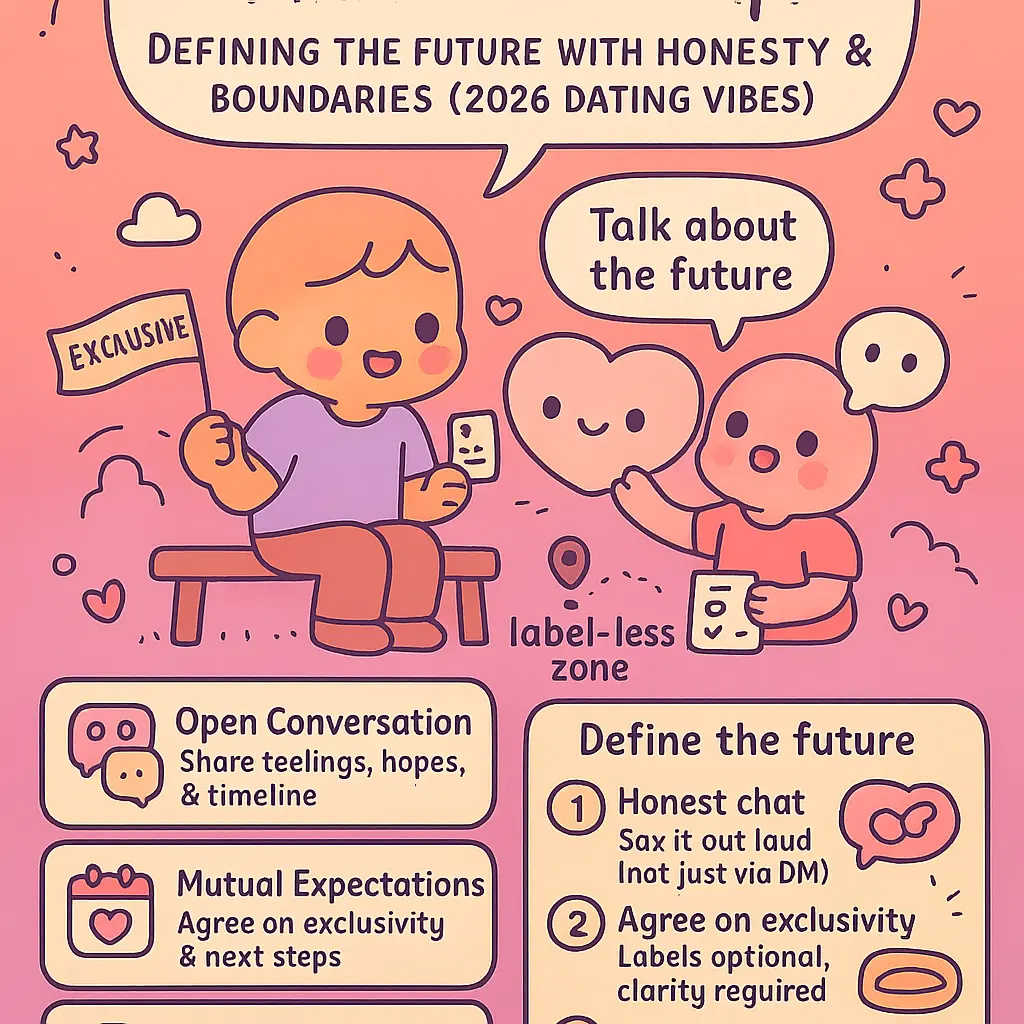
Defining the Future
When deciding how to define the future in an exclusive-but-not-official relationship, it’s essential to tap into honest conversation and mutual expectations. Modern dating trends in 2026 emphasize open dialogue about emotional intimacy, exclusivity, and boundaries, especially as the label-less relationship becomes increasingly normalized. The deeper you move into exclusive dating—without a clear boyfriend/girlfriend label or official relationship—there’s a point when both you and your partner need to reflect on what commitment looks like for you. Before making assumptions or sliding toward emotional cheating, taking a pause to assess your feelings and goals can save confusion and heartbreak down the line.
Practical Approaches to Clarifying Future Boundaries
To clearly define your path forward, approach the discussion with vulnerability but also with a plan. Here are actionable strategies that relationship experts 💡 currently recommend: - Have a “State of the Relationship” checkpoint: Schedule a time that feels natural—maybe after several months of exclusive dating—where both of you can talk through what you want out of your connection, in terms of physical intimacy, monogamy, and expectations. - Use direct language: Instead of circling around terms like “seeing each other” or “just enjoying things,” bring up exclusivity explicitly. Are you only being physically and emotionally intimate with each other? Is flirting or private chats with others acceptable? - Assess mutual comfort with labels: Not everyone is chasing a marriage destination in today’s psychology of dating. Some want faithfulness but resist rigid commitment milestones. Recognize if you both prefer relationship boundaries and exclusivity without needing boyfriend/girlfriend or marriage labels—or if someone’s secretly hoping for more official terminology. - Identify potential manipulation or red flags: If one partner avoids commitment talks, tries to blur exclusivity clauses, or disregards previous boundaries, reassess your decision to stay exclusive. Sometimes, label avoidance masks commitment issues. - Determine communication rhythm: When defining your future, gauge how much you update and reassure each other. In label-less relationships, regular check-ins feel less forced but don’t mean communication should decrease. Does somebody start feeling insecure about their dating status or emotional intimacy? That may signal a mismatch in long-term goals.
Examples of Forward-Facing Relationship Designs
Let’s say one couple after three months of exclusive dating chooses not to call each other boyfriend/girlfriend, but they're clear about exclusivity and faithfulness. They regularly revisit their definition—sometimes quarterly—to reaffirm mutual expectations about monogamy and physical/emotional intimacy. This prevents accidental boundary crossing. Other duos might negotiate being “exclusive friends with benefits,” retaining some casual dating flexibility without buttoned-up relationship goals. The point is, your modern relationship can thrive with unique parameters if both sides have crystal clear communication wires.
A friend might feel out betrayal when one partner acts like it’s almost an official relationship while still telling other people, “We’re not committed.” That gray area introduces emotional risk and places intimacy at stake. You can minimize tension with early—and sometimes awkward—talk about needs, hopes, and what comes next. For some, it’s continuing as is and enjoying moment-to-moment dating exclusivity. For others, eventual clarity about wanting an official partnership, or even moving toward long-term goals like marriage, becomes a must.
Key Advice for Navigating Modern Expectations
Relationship advice from experts now repeatedly highlights that dating terminology is whatever works for you, not what society or friends expect. Still, clarity is vital. If you sidestep these talks with vague emotional intimacy or let boundaries slide, manipulation and confusion become more likely with time. Particularly in dating scenes where multiple label variations exist, nothing beats an honest sit down about the future—even if it doesn’t have dripping romance.
For anyone in these relationships today, take charge of your own comfort: - Do you crave an exclusive relationship with strong boundaries or like keeping things label-free with shared agreement on monogamy and intimacy? - Do those discussions bring you security—or highlight unspoken commitment issues? - Are you willing to adapt as expectations shift due to life changes or deeper emotions?
Ultimately, defining the future in exclusive but not official romantic relationships means placing caring, authentic talks at the center and watching out for anything that crosses your boundaries. Labeling relationships isn’t as important as building mutual faithfulness, emotional safety, and realistic dating expectations for each unhappy gray after sunset or sweet milestone going forward.
Professional illustration about Intimacy
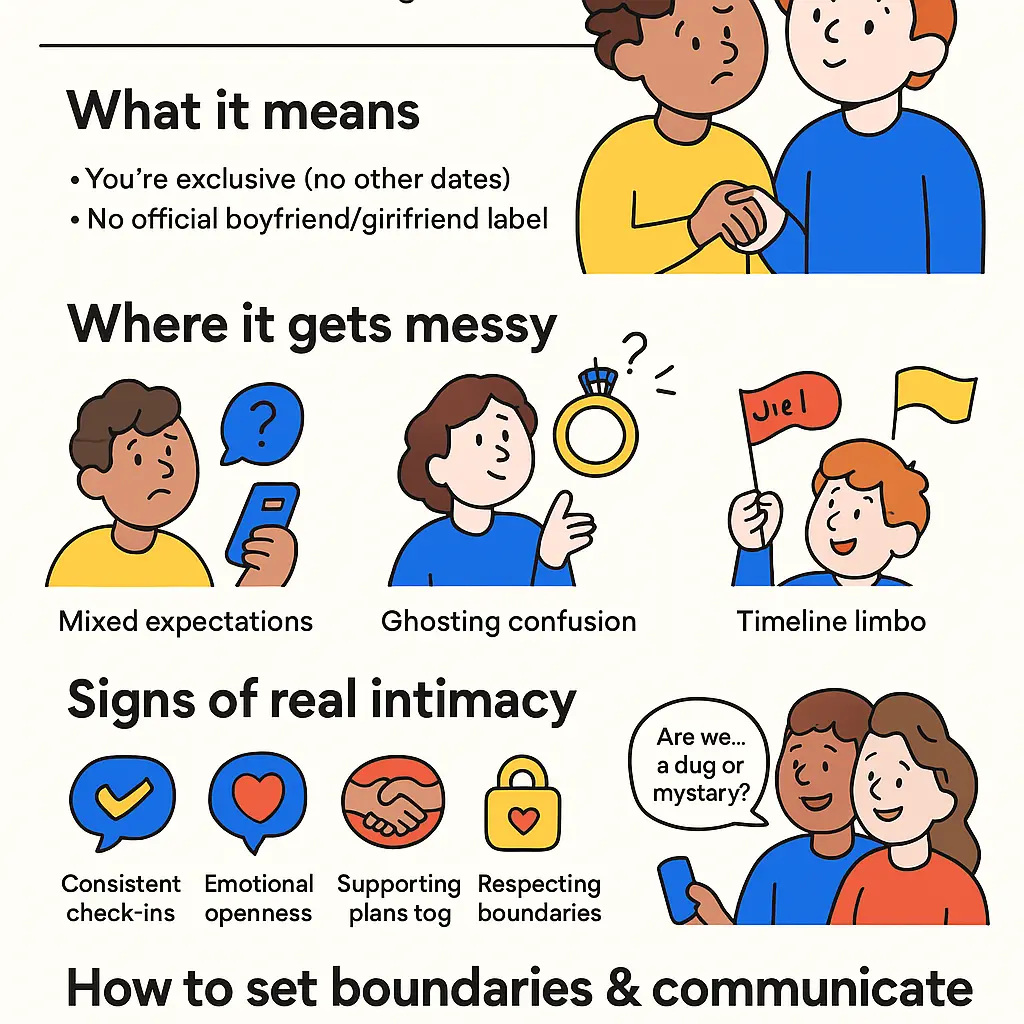
Dealing with Uncertainty
Navigating the uncertainty of an “exclusive but not in a relationship” situation can be downright confusing, especially when commitment, exclusivity, and the elusive boyfriend/girlfriend label are up in the air. In 2026, modern dating trends often prize authentic connection, yet label-less relationships slip into a gray area where expectations, boundaries, and security get murky. If you’re experiencing emotional intimacy with someone but you're not sure about the official relationship status, the first thing to focus on is clarity of communication. Be honest: communicate your thoughts, fears, and needs openly. While it’s tempting to avoid “the talk” to keep the vibes chill, relationship experts note that ambiguity often breeds anxiety and unmanaged expectations.
Concrete strategies to deal with uncertainty involve defining personal and shared boundaries. If “exclusive dating” means neither of you are seeing other people, then outline what exclusivity actually involves: Is physical intimacy reserved only for each other? Does flirting or DM’ing other people count as emotional cheating? Addressing faithfulness and physical boundaries allows for healthier emotional signals and less potential for manipulation or misunderstanding. Sometimes, one partner may be emotionally ready for monogamy and a committed exclusive relationship while the other has notable commitment issues, perhaps fearing that an official relationship brings pressure or goals like marriage that they're not ready for. In these cases, it’s essential for each person to articulate where they stand—not just for clarity but for emotional wellbeing.
Consider using the following approach to set intention and reduce uncertainty:
- Self-Reflect on Your Goals: Do you actually want a label, or are you comfortable in your current situation? Is casual dating working for you, or do you crave the security offered by an official relationship?
- Open Communication: Express calmly—not through accusations or ultimatums—what you’re feeling. Example: “Sometimes I feel confused about where we stand. I genuinely care about you, but I’m wondering if we’re looking for the same kind of relationship.”
- Seek Feedback: Invite your partner to share their viewpoint. Are they anxious about titles, or do they have relationship red flags such as fear of exclusivity? Listen without immediately reacting, to foster trust and true emotional intimacy.
Often, with friends with benefits dynamics, emotional gates start to simmer—jealousy may surface if either suspect the other crossing relationship boundaries, privately or physically. For label-less relationships, psychology of dating experts say it's critically important to sync expectations for exclusivity. Ask directly but gently: “What does exclusivity mean to us?" or "At what point would physical intimacy or talking to other people become disrespectful?” These open-ended dialogues actively prevent confusion, the kind of gray-area stuff that often leaves people blindsided or even feeling manipulated.
Managing ambiguity also calls for self‐preservation and having preventative habits in place. Set and regularly review your boundaries—what behavior makes you feel safe, appreciated, and loved. If at any point the “exclusive but not official” date nights start turning into one-sided investing (e.g., emotional intimacy and loyalty from only one person with none reciprocated), pause and evaluate if the arrangement serves you, or if it’s time to reconsider your own standards. Modern dating systems have evolved, so the psychology of staying label-free is uniquely personalized; some find it empowering, others destabilizing.
One creative way people are coping in 2026: temporary labels (e.g., “exclusive for now”) that identify boundaries without locking in rigid long‐term expectations. These help manage commitment issues while signaling both emotional and physical faithfulness. Still, experts warn that lack of clear intentions often perpetuates anxiety, so the crucial skill isn’t avoiding labels, but actively checking in if your needs—be it intimacy, clarity, or security—are being met.
Ultimately, handling uncertainty is about knowing yourself, expecting mutual respect, and being bold enough to address uncomfortable questions about relationship status and future outlook. If doubt persists and continual talking brings no progress, that too is valuable data; sometimes ambiguity reveals incompatibility in needs for exclusivity or long-term intention. Above all, protecting your self-worth through mature communication, healthy relationship boundaries, and regular expectation management will keep dating—and love—refreshingly honest, no matter the label.
Professional illustration about Marriage
Social Media Dynamics
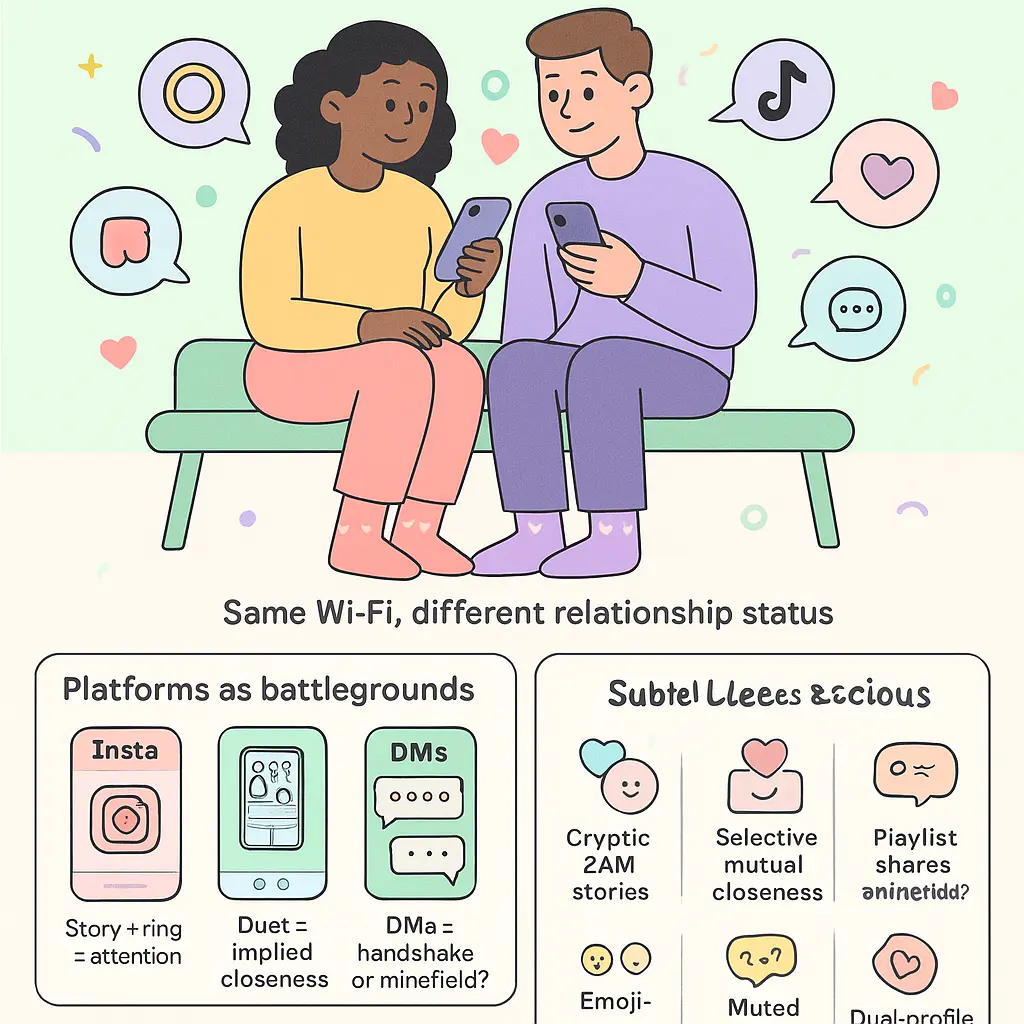
Social media in 2026 has pushed the boundaries even further in how individuals navigate exclusive dynamics without the formal “in a relationship” label. Apps like Insta, TikTok, and private messaging are some of the most visible battlegrounds, elevating subtle dating cues and cryptic stories into signals loaded with implications about commitment, exclusivity, or the possibility of emotional cheating. When two people are exclusive but not officially together, posting—or not posting—certain photos, reactions, or shared moments can lead to confusion about relationship boundaries and expectations. For example, sharing intimate reels or flirtatious comments, watching each other’s close friends’ stories, or choosing whom to tag on music playlist posts can become a quiet game of defining loyalty and perceived exclusivity. Without the ‘boyfriend/girlfriend’ label, followers might view both profiles for relationship status hints. This places real pressure on maintaining faithfulness and understanding what behaviors are appropriate—even what seemingly innocent DMs can mean—in this “label-less” space.
Psychologically, today’s massive feed consumption has reshaped communication in relationships. Relationship experts note that modern dating trends encourage “soft launching” on socials: cryptic posts shared just enough to make friends ask questions, keeping things undefined yet suggestive. This backing away from clear relationship rules can create commitment issues; users look for digital proof their exclusive partner feels similarly, creating a feedback loop that heightens defensiveness and insecurity. Casual dating, friends with benefits scenarios, or monogamous loyalty without marriage further muddle things: does liking another person’s predictable thirst traps or sharing “late night vibes” fly, or is it perceived as emotional intimacy beyond what’s healthy? Couples might feel manipulated or may tiptoe on posting certain stories if they fear emotional cheating—even if nothing physical has happened.
Navigating relationship labels versus online presence: concrete tips for 2026
- Establishing Mutual Boundaries: Discuss, repeatedly, what feels okay on social media. If tagging at brunch or commenting on swimsuits feels too public, say so. Boundaries on social profiles are no longer optional — good communication is vital before uploading vacation TikToks or R-rated memes.
- Avoiding Manipulation and Oversharing: Be mindful about pushing boundaries for jealousy (“sub-tweeting” angsty relationship quotes or excessive photos with attractive third parties). Even adults can slip into these games if both parties don’t feel secure. Real exclusivity reflects not only off-platform monogamy but mindful virtual faithfulness.
- Labeling relationships and clarity: Don’t let the psychology of dating online sabotage more intimate elements like trust and commitment. If someone wants official couple pictures to signal their exclusive dating intentions to the broader world, agree—or talk about why one partner shies away. Relationship advice in 2026 emphasizes checking in often: supposed modern ambivalence about labels means it’s easy to cross lines unknowingly, leading to red flags and heartbreak.
- Handling outside digital attention: When DM flings, comments from admirers, or intentional partial replies stir friction, partners need to be real about digital expectations. Are certain friendship interactions okay? What qualifies as romantic exclusivity tarnished by cyber-trysts or hidden “secret friendlies”? This is becoming a real marriage conversation starter even before engagement.
Proximity, emotional intimacy, and selective sharing overload connect directly with contemporary dating terminology: are you posting as a couple to reinforce what you privately feel, or quietly avoiding all labels to deny commitment? Check in frequently, because distractions in this space are intense: private channels like Stories-with-select-friends, ephemeral snaps, username-only playlists, dual-lit filtered images—each new 2026 social feature increases room for (mis)communication and symbolic monogamy. The pressure to present or protect what doesn't have an official title is getting heavier by the post: exclusive dating in the digital realm now demands genuinely honest coordination in ways every psychology of dating aficionado might publish arguments about what is—and is not—cheating or manipulation when marriage-like signals haven’t yet started.
For anyone facing the minefield of exclusive non-relationships on social platforms, clarity, frequent boundary talk, and evaluating emotional intimacy through both physical and posting behavior are without a doubt central as short-lived dating expectations continue evolving into real-life impact. Faithfulness now gets measured differently, marriage preparation often kicked aside for endless scrolling, and what happens online is ending up as make-or-break for relationships before anything ever gets official. In 2026, understanding these social media dynamics isn’t just trendy dating advice—it’s essential relationship survival.
Professional illustration about Exclusive
Exclusive Dating Etiquette
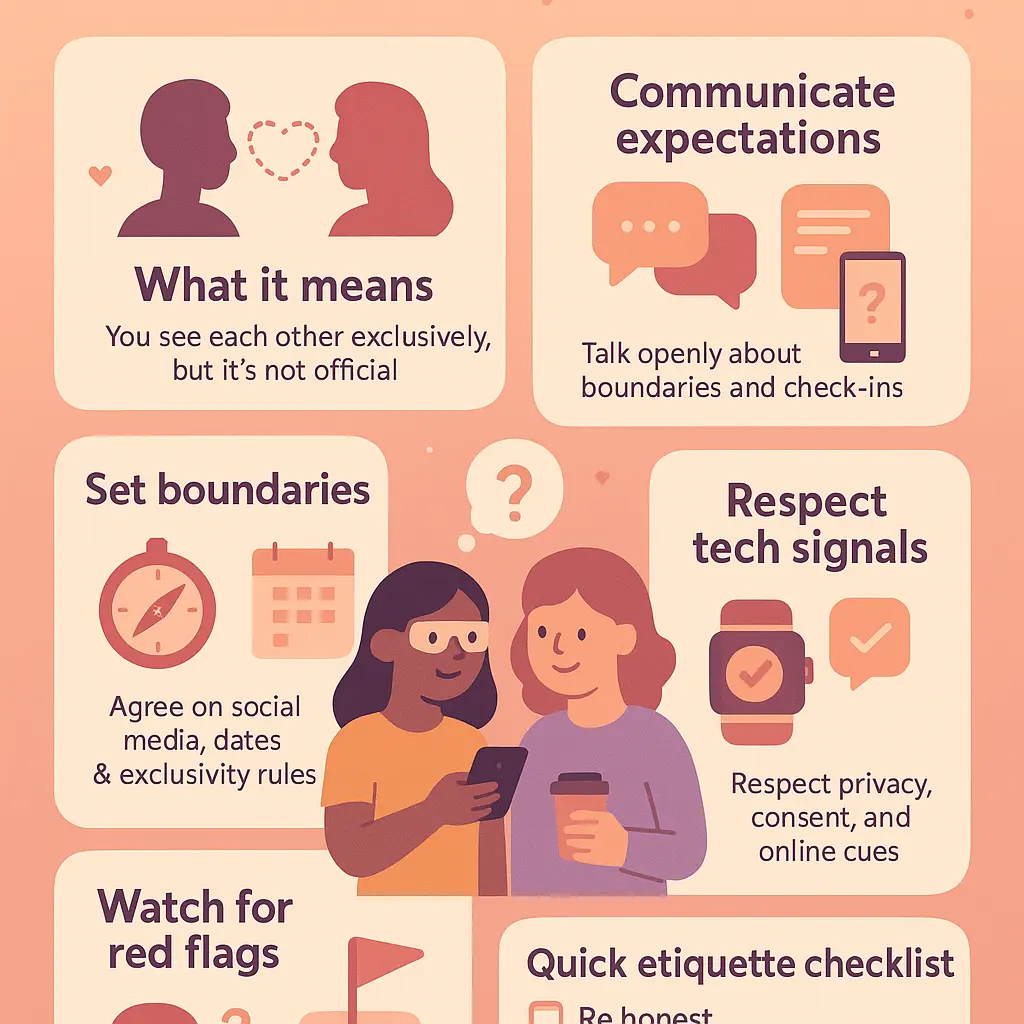
Navigating exclusive dating etiquette in 2026 can be surprisingly complex in today’s era of modern dating trends where everyone's expectations and definitions of Commitment are a little different. When you're exclusive but not officially in a full-fledged Exclusive Relationship with the traditional boyfriend-girlfriend label, setting clear boundaries and guidelines for dating exclusivity is essential. This etiquette essentially builds a respectful framework, allowing both individuals to navigate participant needs for Emotional Intimacy, Physical Intimacy, and mutual respect without the pressures of rushing into “Relationship Status” labels.
A vital step in managing exclusive partnerships is establishing a conversation about where each person stands on being exclusive. For instance, someone with Commitment issues might feel more comfortable defining what exclusive means: Do we continue seeing only each other romantically? Does exclusivity imply additional responsibilities related to faithfulness, or is it just about not pursuing new dates? Being clear about these definitions at the outset and during regular check-ins prevents confusion over gray zones like Friends with Benefits scenarios, casual dating, or emotionally ambiguous situations. Relationship experts agree that neglecting these discussions is one of the biggest Relationship red flags influencing the psychology of dating today.
In a situation where monogamy has been chosen but without adopting an official labeling relationships dynamic, both parties should intentionally communicate whether activities like emotional venting to another potential romantic interest correspond to Emotional Cheating or simply platonic connection. Various dating advice sources emphasize that honesty about emotional and romantic needs is foundational within label-less relationships. For example, it’s not uncommon for questions about what counts as flirting or appropriate online behavior to arise; this is especially prominent on social media where dating terminology fluctuates. Updating each other on general comfort zones enhances connection—a subtle, but powerful show of respect unique to exclusive dating that can ultimately strengthen the relationship’s emotional fabric.
Practical exclusive dating etiquette today often includes the importance of privacy and boundaries rather than publicity or broadcasting. Without the safety-net of a public “boyfriend” or “girlfriend" title, the behaviors and affection shown on outings, at social events, or on digital feeds should remain a joint choice. Some couples Aspire keeping their exclusivity discreet, seeking depth through Emotional intimacy rather than public recognition, whereas others crave visible affirmation even before adoption of official labeling. Here, mutual agreement on what counts as sharing versus oversharing is not just etiquette, but paramount in safeguarding both partners from misunderstanding, suspicion, or the appearance of gamesmanship or manipulation.
Clear etiquette also helps reduce misunderstandings about priorities and futures. Does exclusivity on both sides indicate intentions toward potential Marriage, or is it an indefinite phase preceding a future move into full relationship monogamy—or will you part ways if or when someone wants an official relationship status transition? Mature inclusion of everybody’s intentions respects diverse dating goals; maybe someone values the time being exclusive to deepen a foundation before offering bigger declaration, while their partner seeks comfort in reaffirming a next level is, or isn’t, the commitment goal. Navigating this involves open dialogue about identity within your “relationship,” akin to exclusive co-pilots steering a GPS route with checkpoints instead of rushing for destination triumph.
From the viewpoint of a Relationship Expert, fostering cordial honesty about exclusivity heads off social drama and ambiguities that fuel common modern pain points like ghosting, contradictions over seeing others, and discussions about who’s obligated to meet family or attend friend circles. People enjoying exclusive dating arrangements frequently strive for a middle ground—honoring each person's timeline and dating expectations, smoothing over pressure without constructing excuses for inconsistency.
Worth noting, maintaining exclusive dating rules isn’t the same for everyone: for instance, someone who recently got out of a long-term exclusive relationship may need more gradual tempo while someone ready to progress desires steeper emotional investment, possibly anticipating nephews up ahead. Forgetting to regularly check mutual feelings can translate to accidental manipulation if needs for reassurance, autonomy, adventure (or comfort) get ignored. Successful etiquette includes permission—spoken or involved understanding enough—for gracefully opting out, swapping customs, or mutually brainstorming what steps safeguard personal well-being along the exclusive journey.
Overall, exclusive dating etiquette means viewing exclusivity as an active, evolving process rather than a static agreement. Like any form of respect in Romantic Relationships, the truest markers are: clear communication, authentic agreement on boundaries, proactive discussion about intentions, realistic reckoning with relationship boundaries, and consistent review as each person’s desires naturally evolve. Following these current etiquette standards empowers daters to enjoy real connection and confidence—even without clinging to conventional labels—in today’s layered world of attraction and attachment.
Professional illustration about Manipulation
When to Define the Relationship
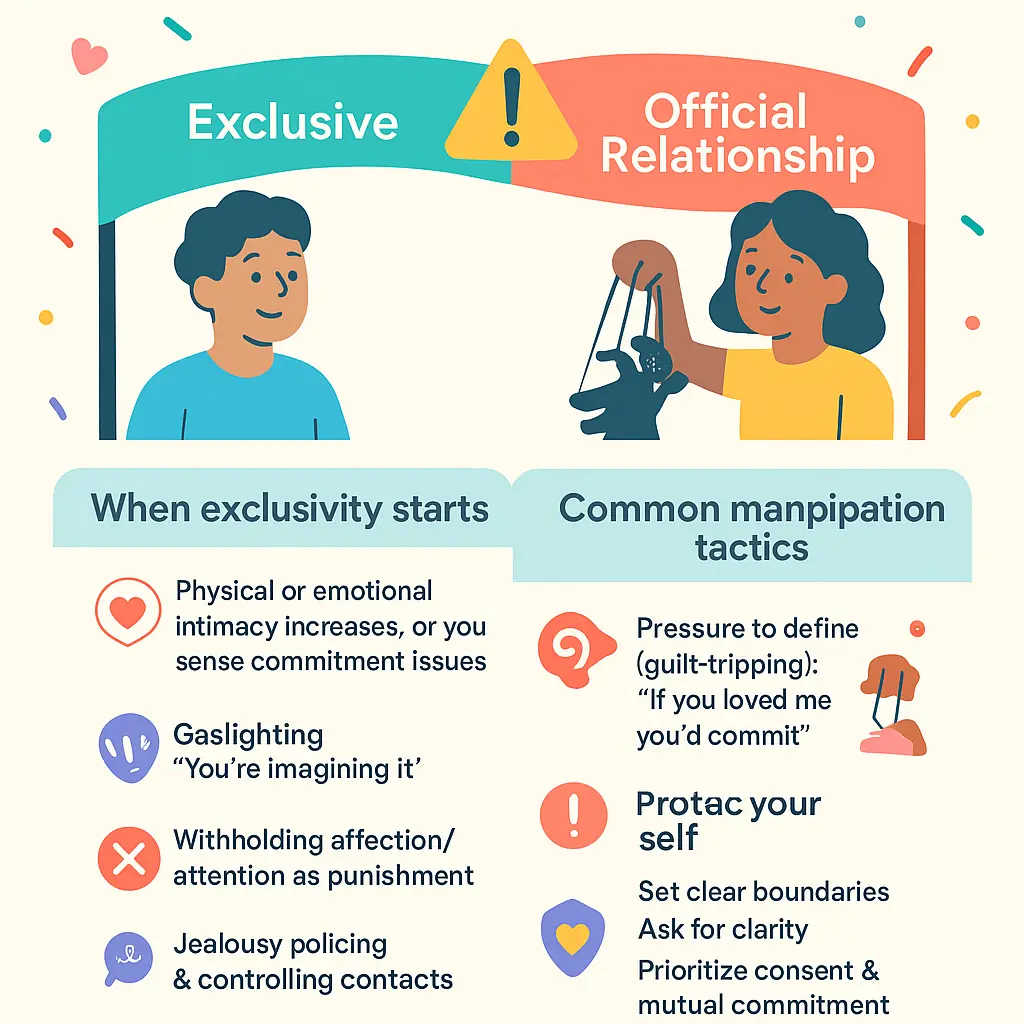
Defining the relationship is a pivotal moment in modern dating landscapes like 2026—bridging casual exclusivity and a truly Official Relationship. Typically, people start thinking about Exclusivity once physical or emotional intimacy takes center stage, or they sense Commitment issues (either their own or their partner’s). Key markers for the “right time” come with growing feelings, increased vulnerability, and concerns about Relationship status turnaround. If you notice that your expectations around Faithfulness, boundaries regarding Emotional cheating, or distinctions between exclusive dating versus friends with benefits aren’t transparent with your partner, it’s a signal you need real conversations around Commitment.
Frequently, one partner starts requiring answers due to uncertainty surrounding behavioral red flags or confusing Dating terminology—are we a couple, or just exclusives hanging out minus the boyfriend/girlfriend label? This ambiguity around Labeling relationships registers particularly high now as mainstream figures on Relationship labels and advice keep evolving. If mutual efforts lean toward serious exclusivity—like spending holidays together, meeting each other’s inner circle, discussing future events months ahead, or navigating Emotional intimacy on a deeper daily level—it may be wise to pause and prompt the “Define the Relationship” talk.
Talking boundaries is essential when pre-Exclusive Relationship grey areas arise, such as navigating recoveries from manipulation, importance of psychological safety within monogamy settings, or combining career priorities. While it's normal that individuals in Friends with Benefits scenarios or those slightly casual with physical intimacy may postpone official limits, a relationship expert would definitely advise clarifying wants earlier in exclusive dating binds before resentment or misread expectations morph into larger misunderstandings. Pinpointing the right time means assessing emotional cues against tangible situations: Are you—and your partner—ready for new accountability, obligations, and clarity within your flirt, date, love cycle?
Concrete example: Carrie’s story from 2026 is more common now. After three months of meeting every weekend, subtly developing modern relationship habits and brunch talks about marriage or solo parent retreats, she noticed regular usage of couple-oriented behaviors, minus explicit chatting over intentions and boundaries. For Carrie, realizing her feelings were escalating quicker than defined next-level exclusivity, courageously outlining Dating expectations filtered the grayness. That decision fostered Certificate clarity and protected her investment in Romantic relationships, ensuring she avoided unwanted Emotional upheaval courtesy poorly drawn Commitment assumptions.
Relevant advice in 2026 is(i) visualize what having “Official Status” really means to each of you with concrete commitments—from routine texting or skipping weekends apart to partnering through crisis or planning Mini-milestones.(ii) Schedule the “DTR” conversation as soon as conflicting comunicatives such as future vacation plans, or hesitances of keeping other hands out the cookie jar—creep up. Don’t brush past intuitive signals both physical and emotional that surface post-exclusive talk rituals. Setting healthy Relationship boundaries process allows resilience against manipulation, dependency traps, and the unfortunately prevalent practice of continuing intimacy without clear partner agreement.
On a practical note, establish Rapport so your talk naturally transitions from your current Modern dating scenario and reflects today’s relational fabric—like negotiating careers, cultural frames, perhaps housing logistics—and allow space for both Declaration of exclusivity as well as potential adjustment if one exhibits classic Commitment issues associated with Adoption, Faithfulness, or long-term eventualities (marriage, cohabitation, joint investments). With robust communication in relationships as the prior, exploring definitions before deep monogamy hits ensure everyone involved exits Label-less relationship permutations and existence in relationship assumption makes way for Relationship reality, authenticity, and rewarding emotional partnership possibilities.